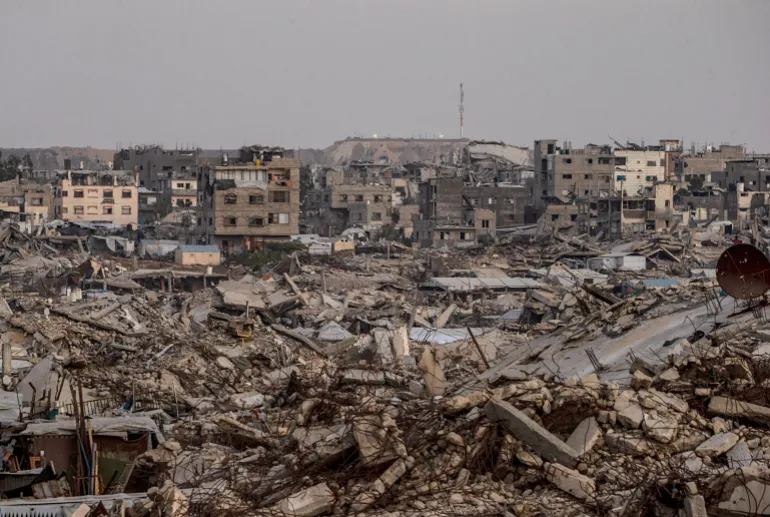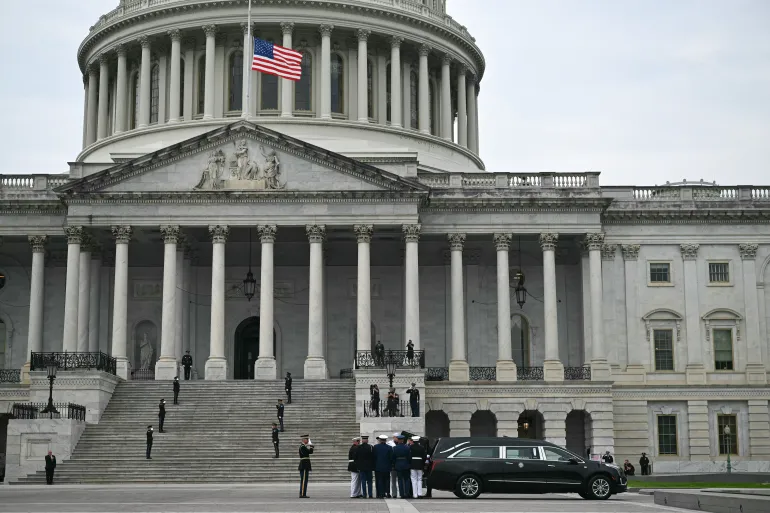
The US House votes 220-204 to end the Iran war, with seven Republicans joining Democrats as costs, inflation and war powers fuel debate.
US House Votes to End Iran War as 7 Republicans Join Democrats
The US House of Representatives has voted for a third time to end the war in Iran, approving a war powers resolution that would restrict President Donald Trump’s ability to continue military operations without authorization from Congress.
The measure passed by a vote of 220-204 late Tuesday, with all House Democrats voting in favor alongside seven Republicans. Three of the Republican lawmakers supported the resolution for the first time, signaling growing divisions within the party over the continued US military campaign against Iran.
The vote comes nearly seven months after Trump launched military action against Iran on February 28. The conflict has continued through periods of intense missile exchanges and pauses in fighting, creating significant political, economic and military pressures for the United States.
Republican Congressman Zach Nunn of Iowa said he supported the resolution because the opportunity for negotiations had ended and continued combat operations should now require congressional authorization.
“With the negotiating window closed, sustained combat operations now require congressional authorization,” Nunn said, adding that he would not support another open-ended war.
Congress Challenges Trump’s Iran War Policy
The latest House vote is unlikely to immediately end US military operations in Iran. Previous resolutions attempting to restrict the administration’s military authority have not reached the president for approval.
Even if the current measure reaches Trump’s desk, he is expected to oppose it. The president has maintained that US military action against Iran is necessary to address what his administration considers an ongoing threat.
Republican Congressman Brian Mast of Florida, chairman of the House Foreign Affairs Committee, questioned what military resources lawmakers would seek to remove from the region if the resolution became law.
Mast argued that Iran continues to pose a threat to the United States and defended the administration’s approach. He said Trump opposes “forever wars” and characterized the current military campaign as an effort to bring long-running hostilities with Iran to an end.
The disagreement highlights the broader debate in Washington over presidential war powers, congressional authority and US military involvement overseas.
Iran War Adds Economic Pressure
The continuing Iran conflict is also creating economic concerns inside the United States.
A recent Congressional Budget Office assessment estimated that the six-month cost of the war has reached approximately $38 billion, with spending expected to increase by around $3 billion per month if the conflict continues.
The analysis also projected that the war could increase US inflation by approximately 0.5 percentage points during the first three months of 2027.
The financial impact comes as the United States is also dealing with pressure on its military stockpiles. Sustained combat operations require significant quantities of missiles, ammunition and other military equipment, potentially affecting the country’s ability to respond to other security challenges.
The economic consequences of the Iran war have therefore become an increasingly important issue in the domestic political debate.
Americans Question the Iran Conflict
Public opinion is also adding pressure to the debate over the war.
A July poll found that a majority of Americans believed the war in Iran had not been worth fighting. The issue is particularly significant as members of Congress prepare to return to their districts and campaign ahead of the midterm elections.
With fewer than 50 days remaining before voters decide control of Congress, the Iran war is becoming an important campaign issue for both political parties.
Democrats are seeking to regain congressional power, while Republicans face questions about the administration’s foreign policy and the financial and military costs of the conflict.
Previous Iran War Resolutions
Congress has already taken several steps to challenge the administration’s authority to continue military action against Iran.
The House approved a war powers resolution in June and another in July, with both measures seeking to restrict US military operations.
The Senate also approved a similar resolution after multiple attempts. However, Republican senators reversed their position the following day after Trump strongly criticized the measure during a private meeting.
The dispute centers on the constitutional division of military powers. The Constitution gives Congress the authority to declare war, while the president serves as commander-in-chief and retains authority to conduct certain military operations.
The War Powers Act, enacted following the Vietnam War, was designed to establish limits on presidential military action. It generally requires congressional authorization for sustained military operations beyond specified time limits.
The latest House vote therefore represents another attempt by lawmakers to assert congressional authority over the US Iran war.
As lawmakers leave Washington to campaign for the midterm elections, Tuesday’s vote could be the final major House action on the conflict before voters go to the polls. The outcome of the election could determine how Congress approaches the war and presidential military powers in the months ahead.