Pakistan’s military sees positive signs in US-Iran mediation as Asim Munir meets Iranian, Saudi and Turkish officials to pursue regional peace.
Pakistan Army Cautiously Optimistic About US-Iran Mediation as Regional Peace Efforts Continue
Pakistan’s military has expressed cautious optimism about diplomatic efforts to ease tensions between Iran and the United States, following two visits to Tehran by Pakistan’s army chief during October. The latest diplomatic initiative, involving Saudi Arabia and Türkiye, has raised hopes of reviving a ceasefire in the eight-month-long conflict, although significant obstacles remain.
Lieutenant General Ahmed Sharif Chaudhry, spokesperson for Pakistan’s armed forces, said on Friday that repeated visits by Field Marshal Asim Munir indicated there were encouraging signs in the mediation process. However, he warned that influential parties opposed to peace could still undermine efforts to end the conflict.
The comments came after a high-level delegation from Pakistan, Saudi Arabia and Türkiye travelled to Tehran on October 26 to meet Iranian officials. The diplomatic engagement represents an important regional attempt to prevent further escalation and create conditions for renewed negotiations between Washington and Tehran.
Pakistan Sees Encouraging Signs in Iran-US Negotiations
Speaking to Reuters in Rawalpindi on October 30, Chaudhry acknowledged that Pakistan’s mediation efforts had shown indications of progress.
He pointed to Munir’s two visits to Iran during October as evidence that diplomatic engagement was continuing for a reason. Nevertheless, he avoided suggesting that an agreement was close or that the two opposing sides had resolved their differences.
Chaudhry also cautioned that there were powerful groups and individuals who believed the continuation of the conflict served their interests. He did not identify those actors or provide further details about the potential obstacles facing the negotiations.
The military spokesperson declined to reveal what was discussed during the latest meetings in Tehran. He also did not confirm whether the United States had formally supported the delegation’s diplomatic mission.
Pakistan has increasingly positioned itself as an intermediary between Iran and the United States as the conflict threatens regional stability. Its diplomatic involvement has gained importance because of its relationships with both Tehran and Washington, as well as its security partnership with Saudi Arabia.
Asim Munir Leads Regional Diplomatic Initiative
Field Marshal Asim Munir has emerged as a central figure in Pakistan’s efforts to reduce tensions between Iran and the United States.
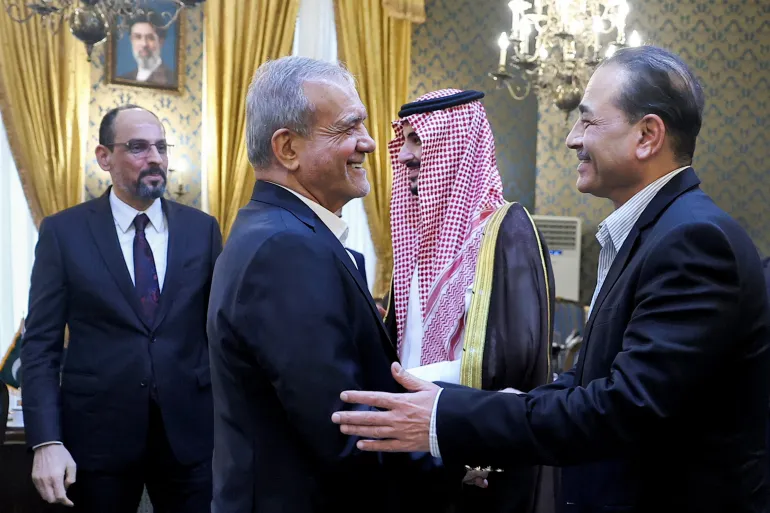
His latest visit to Tehran on Monday, October 26, included Saudi Defence Minister Prince Khalid bin Salman and Turkish intelligence chief Ibrahim Kalin.
The participation of Saudi and Turkish representatives gave the discussions broader regional significance. Both countries have important security and political interests in the Middle East and have sought to manage the consequences of the ongoing conflict.
The October 26 meeting was particularly notable because it brought together representatives of all three countries that signed a joint defence agreement on August 7.
The agreement, known as the Makkah Joint Defence Agreement, establishes a collective security commitment under which an armed attack against one participating country would be treated as an attack against the others.
The arrangement has attracted additional attention as the Iran-US confrontation has altered regional security calculations and increased concerns about a wider war.
Could Iran Join the Makkah Defence Agreement?
Pakistan’s military spokesperson also addressed the possibility of Iran becoming a member of the regional defence arrangement.
Asked whether the agreement prevented additional countries from joining, Chaudhry indicated that its wording did not exclude new members.
He suggested that countries sharing the objectives of collective deterrence and regional peace could potentially be considered for membership. However, he emphasised that any decision would ultimately rest with the political leadership of the existing signatories.
The possibility of Iran joining such an arrangement would represent a significant development in regional security relations. Nevertheless, no formal invitation or agreement involving Iranian membership was announced.
Following Monday’s discussions, Mohsen Rezaei, secretary of Iran’s Supreme National Security Council, said regional security should be managed by countries in the region rather than external powers.
His remarks reflected Tehran’s preference for regional security arrangements that reduce dependence on foreign military involvement.
Pakistan Reaffirms Security Commitment to Saudi Arabia
The discussions have also raised questions about Pakistan’s military responsibilities under its defence agreement with Saudi Arabia and Türkiye.
During the Reuters interview, Chaudhry was asked whether Pakistan planned to send additional troops to Saudi Arabia under the agreement.
He responded that any further deployment would depend on the prevailing circumstances and decisions made by the political leadership of both countries.
The spokesperson reiterated Pakistan’s commitment to defending Saudi Arabia, including the holy cities of Makkah and Madinah.
However, he made a distinction between Pakistan’s defence commitments and the separate conflict involving Yemen. Chaudhry said Pakistan was not participating in the internal Yemeni conflict, despite renewed fighting involving Saudi Arabia and Yemen’s Iran-aligned Houthi movement.
The distinction is important because the Iran war has contributed to renewed regional tensions, including concerns about the possibility of additional confrontations involving Saudi Arabia and the Houthis.
Pakistan’s position reflects an effort to maintain its security commitments while avoiding unnecessary involvement in other regional conflicts.
Yemen Conflict Adds to Regional Security Concerns
The renewed fighting between Saudi Arabia and the Houthis has become another concern for governments attempting to contain the wider Middle East crisis.
The Houthis, an armed movement based in Yemen, have longstanding ties with Iran. Their confrontation with Saudi Arabia has previously contributed to regional instability and disrupted efforts to establish lasting peace in Yemen.
The latest escalation has increased the diplomatic importance of cooperation between Pakistan, Saudi Arabia and Türkiye.
Their defence arrangement is intended to strengthen collective deterrence, but the continuing Iran-US confrontation has created a complicated security environment for all three countries.
Saudi Arabia must balance its security interests with the need to prevent further regional escalation. Türkiye also has strategic interests in maintaining stability across the Middle East, while Pakistan faces the challenge of protecting its relationships with regional partners.
For Islamabad, successful mediation could help reduce the risk of a wider conflict and reinforce its diplomatic standing.
Qatar Also Pursues Diplomatic Engagement With Iran
Pakistan’s efforts are taking place alongside other regional diplomatic initiatives.
According to Al Jazeera’s October 30 reporting, Qatari mediators also arrived in Tehran as part of efforts to revive the ceasefire arrangement between Iran and the United States.
The involvement of multiple regional governments demonstrates the broader concern about the consequences of continued fighting.
However, diplomatic activity should not be confused with a confirmed breakthrough. Pakistan’s military has not disclosed the details of its discussions with Iranian officials, and Chaudhry did not confirm American approval of the latest delegation’s visit.
There has also been no publicly announced agreement establishing a renewed ceasefire through Pakistan’s mediation as of October 31.
What Happens Next in Pakistan’s Mediation Efforts?
Pakistan’s military leadership has indicated that there are reasons for cautious optimism, but it has also acknowledged the difficulties involved in bringing Iran and the United States closer to an agreement.
Munir’s repeated visits to Tehran, alongside the participation of Saudi and Turkish officials, demonstrate that regional diplomatic engagement remains active.
The next important development will be whether these discussions produce concrete commitments from the governments involved. Issues surrounding regional security, military escalation and the future of the ceasefire remain central to the wider dispute.
For now, Pakistan continues to present itself as an intermediary, while Saudi Arabia and Türkiye remain involved in regional diplomatic and security discussions.
The latest statements from Pakistan’s military provide an indication of continued diplomatic engagement, but they do not establish that a peace agreement is imminent. The situation remains unresolved, with regional governments continuing their efforts to prevent the conflict from expanding further.