Nepal rescuers have saved two hydropower workers alive after nine days trapped in a tunnel buried by flood debris, raising hope for more survivors.
Nepal Rescues Two Hydropower Workers Nine Days After Deadly Flood
Nepal rescuers have pulled two hydropower workers alive from a flood-buried tunnel nine days after devastating floods and landslides swept through Himalayan valleys, raising fresh hopes that more missing workers could still be found alive.
The two men were rescued early Friday from the main tunnel at the Trishuli 3A hydropower construction project, where hundreds of workers are believed to have been trapped following the disaster on August 26.
The dramatic rescue has brought renewed hope to families waiting for news of missing relatives. Authorities believe at least 557 workers are missing from the Trishuli 3A project, with about 115 thought to have been inside the main tunnel when the flood struck.
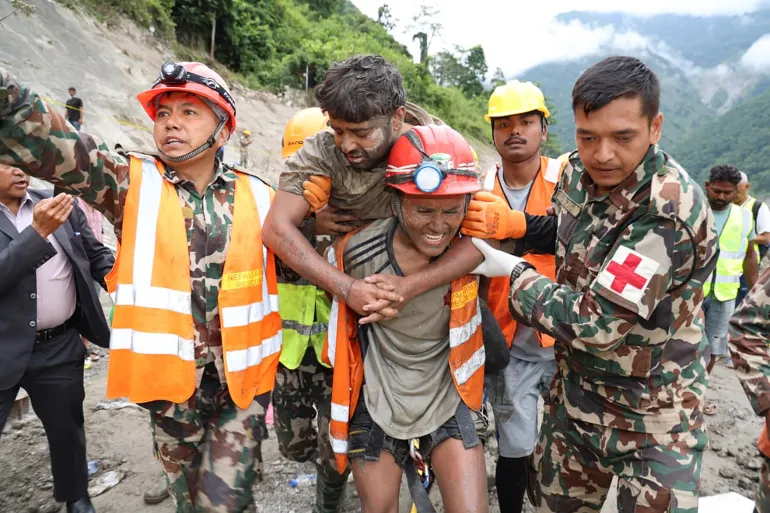
A video released by Nepal’s Ministry of Energy showed rescuers celebrating as one of the survivors emerged through a small opening covered in mud. Emergency workers helped him stand before carrying him toward a waiting helicopter.
A second survivor was also brought out alive. Covered in mud, he appeared to press his hands together in prayer as rescuers carried him away on a stretcher.
The two men were identified as 30-year-old Sanjay Shah, a mechanical foreman, and 45-year-old Kabir Maharjan, a mechanical supervisor. Nepal’s Home Affairs Minister Sudan Gurung confirmed their identities.
Maharjan’s brother, Amir, expressed his relief following the rescue. “I am so happy, my heart is lighter,” he told the AFP news agency.
The Nepali Army said both survivors were receiving medical treatment and would later be taken to a hospital in Kathmandu. Officials said search and rescue operations remain underway as teams continue working through the heavily damaged tunnel system.
The rescue became even more significant after an army spokesperson said one of the survivors had reported that other people could still be alive inside the tunnel. The information has encouraged rescuers to intensify their efforts.
Nepal’s Communication Minister Bikram Timilsina also said authorities remained hopeful that more workers could be rescued.
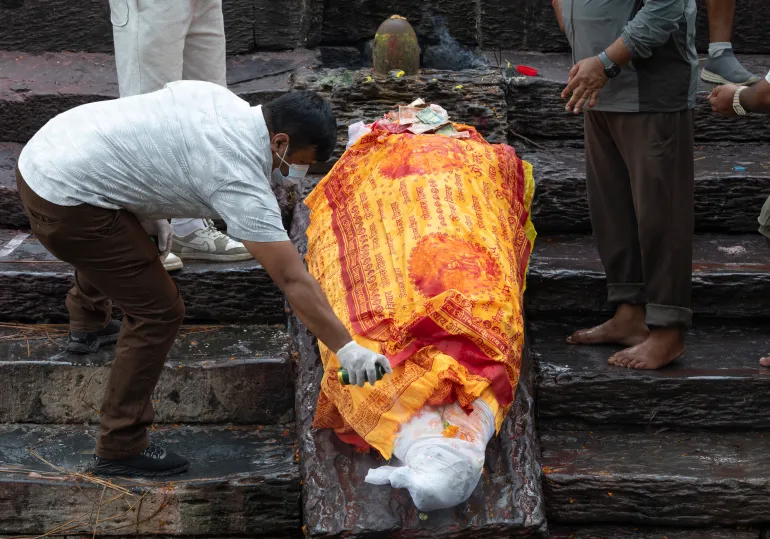
The disaster has caused widespread devastation across Nepal and parts of Chinese-controlled Tibet. Floodwaters, rocks and mud raced through Himalayan valleys, destroying infrastructure, homes and entire communities. The disaster is believed to have been triggered by the partial collapse of a glacier, which sent a massive surge of water and debris downstream.
At least 1,294 people have been confirmed dead in Nepal, while tens of thousands have been displaced. More than 5,600 people were initially reported missing across Nepal and Tibet. On the Tibet side, Chinese authorities said 31 people had died and 531 remained missing.
The rescue operation has largely been conducted by Nepali authorities, as Nepal has generally declined international assistance. However, Australia has now sent a specialized team to support the search.
A 15-member Australian team, made up mainly of state emergency personnel and drone specialists, arrived in Nepal on Friday at the request of the Nepali government. The team is expected to use drones and other technology to help locate survivors and missing people in areas that remain difficult or dangerous for rescuers to reach.
Jeremy Fewtrell, commissioner of Fire and Rescue New South Wales, said rescuers were still holding on to hope that people could have survived in protected locations.
The Australian deployment comes as authorities continue searching for missing Australian citizens. At least 36 Australians are still reported missing following the disaster.
The survival of Shah and Maharjan after nine days underground has provided a powerful reminder that people trapped beneath collapsed structures may survive for much longer than initially expected. Their rescue has therefore increased pressure on authorities to continue searching tunnels and other damaged hydropower facilities.
Families of missing workers are now anxiously waiting for further breakthroughs. Rescue teams face difficult conditions, including unstable debris, mud and damaged infrastructure, but officials say operations will continue.
For Nepal, the discovery of two survivors has offered a rare moment of hope amid one of the country’s worst recent natural disasters. As rescuers continue their search, families and authorities are hoping the “miracle” rescue will be followed by the discovery of more people alive beneath the debris.