Iran-Pakistan ties deepen as Qatar and Pakistan seek Iran-US talks amid rising tensions, Strait of Hormuz attacks and regional instability.
Iran-Pakistan Relations Strengthen as US-Iran Tensions Rise
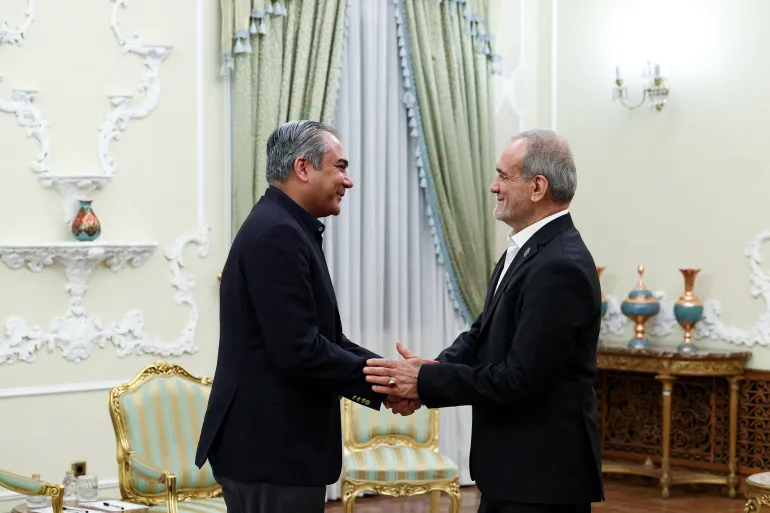
Iranian President Masoud Pezeshkian met Pakistan’s Interior Minister Mohsin Naqvi in Tehran as diplomatic efforts intensify amid growing tensions between Iran and the United States.
Naqvi’s visit to Tehran on Monday marked his sixth trip to Iran since the United States and Israel began their war against the country in February. The visit came as concerns increased over the possibility of further US military action against Iran and the wider impact on regional stability.
During his meeting with Naqvi, Pezeshkian called for stronger Iran-Pakistan relations and closer cooperation among Muslim-majority countries.
Pezeshkian said that US actions and pressure had contributed to greater cooperation and consultation among Islamic countries. He pointed to the frequent meetings between Iranian and Pakistani officials as an example of increasing diplomatic engagement.
Naqvi also described relations between Iran and Pakistan as being at an exceptionally strong level. His comments highlighted the growing importance of bilateral cooperation as tensions in the Middle East continue to affect neighboring countries.
Pakistan and Qatar Push for Iran-US Dialogue
Alongside the Iran-Pakistan talks, Qatar has been working with Pakistan to help reopen a diplomatic channel between Tehran and Washington.
Iranian Foreign Minister Abbas Araghchi traveled to New York to participate in the 81st session of the United Nations General Assembly. Before reaching New York, he stopped in Doha for discussions with Qatari officials about the latest regional developments.
Qatar has said it is working to facilitate dialogue between Iran and the United States and is seeking a possible agreement between the two sides. Officials indicated that even a temporary or short-term arrangement could help reduce tensions and create an opportunity for broader negotiations.
The diplomatic efforts come as Iran faces continued pressure over the conflict, the Strait of Hormuz and its relationship with the United States.
Pezeshkian Heads to New York Amid Rising Tensions
President Pezeshkian is also expected to address the United Nations General Assembly during his visit to New York. He is scheduled to meet several international leaders and senior officials to discuss regional developments and Iran’s diplomatic position.
The United States granted visas to Pezeshkian and Araghchi, while restrictions were imposed on other members of the Iranian delegation regarding travel and purchases.
US President Donald Trump has said that his administration is considering several options for dealing with Iran. These include increased economic pressure as well as the possibility of reaching a diplomatic agreement. Trump has also indicated that he could be open to meeting Pezeshkian.
Iran Presents New Conditions for Talks
Iran’s senior security official Mohsen Rezaei said Tehran has presented the Trump administration with a new set of conditions for restarting negotiations.
According to Rezaei, an earlier 60-day memorandum of understanding reached on June 17 failed to end the conflict or reopen the Strait of Hormuz. Tehran is now waiting for Washington to respond to its latest proposals.
The Strait of Hormuz remains a major concern because it is one of the world’s most important routes for international energy shipments. Any prolonged disruption could have consequences for global oil markets, shipping and regional economies.
New Attacks Reported in Strait of Hormuz
Tensions also increased after reports emerged of attacks involving two tankers in the Strait of Hormuz on Monday.
Iran has targeted vessels attempting to pass through the strategic waterway without authorization or through shipping routes that Tehran does not approve.
The developments have increased concerns over maritime security and the possibility of further escalation between Iran and the United States.
With Iran-Pakistan relations deepening and Qatar working alongside Pakistan to encourage negotiations, regional diplomatic efforts are gaining importance. Tehran’s latest proposals and Washington’s response could determine whether a new round of Iran-US talks becomes possible.
For now, diplomatic engagement remains focused on reducing tensions, maintaining regional stability and finding a possible path toward an agreement between Iran and the United States.