Marco Rubio and Saudi Arabia discuss Yemen, Hormuz Strait security, regional tensions, maritime safety and Lebanon ceasefire efforts.
Rubio and Saudi Foreign Minister Discuss Yemen, Hormuz Security
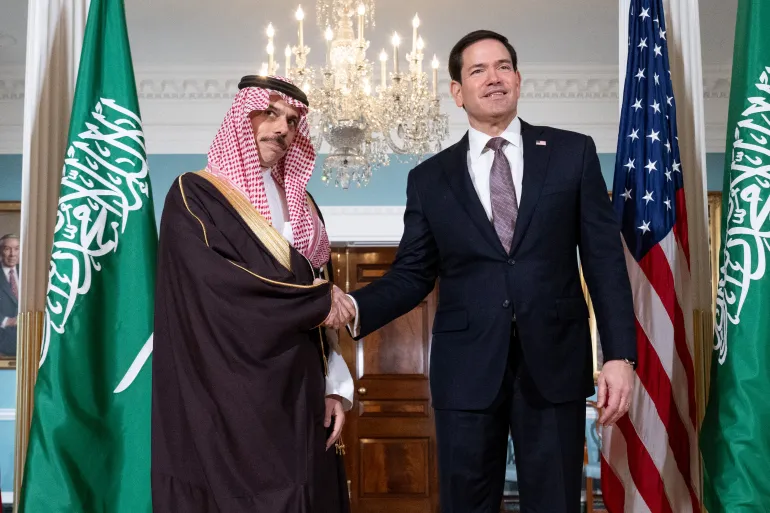
US Secretary of State Marco Rubio held talks with Saudi Arabia’s Foreign Minister Prince Faisal bin Farhan Al Saud in Washington, DC, focusing on regional security, Yemen, Iran, Gaza, Sudan and the safety of international shipping through the Strait of Hormuz and Bab al-Mandeb.
The meeting comes amid growing tensions across the Middle East as the conflict between the United States, Israel and Iran continues into its eighth month. Diplomatic efforts remain stalled, while mediators continue attempts to communicate between the parties and prevent further escalation.
US and Saudi Arabia Discuss Regional Security
Rubio said the discussions covered bilateral cooperation on regional security and stability, including developments in Iran, Gaza, Sudan and Yemen.
Saudi officials said the meeting focused on political and security developments across the region, particularly the situation in Yemen and efforts to address the conflict. The two sides also discussed protecting freedom of navigation and the uninterrupted movement of commercial shipping through key waterways.
The Strait of Hormuz is a critical route for global energy supplies, while the Bab al-Mandeb Strait is an important maritime passage connecting the Red Sea with the Gulf of Aden. Any prolonged disruption in these waterways could affect regional trade, energy markets and international shipping.
The US and Saudi governments emphasized continued diplomatic coordination over regional crises and the importance of maintaining maritime security.
Rising Tensions in Yemen
The talks took place as hostilities involving Yemen’s Houthi movement continue to raise security concerns. The Houthis, who are backed by Iran, have launched attacks along the Red Sea coast and have targeted locations in Saudi Arabia, including airports and energy infrastructure.
Saudi Arabia has sought greater assistance in dealing with the growing threat from the Houthis. Reports indicate that Saudi Crown Prince Mohammed bin Salman requested US military support for operations against the group.
Washington has not agreed to conduct direct strikes against the Houthis. However, the United States has agreed to provide intelligence and targeting assistance, according to reports citing officials familiar with the discussions.
The situation has increased concerns about the security of Saudi Arabia, Yemen and major shipping routes in the Red Sea region.
Hormuz Strait and Maritime Security
The Strait of Hormuz was another major issue discussed during the meeting between Rubio and Prince Faisal. The narrow waterway is strategically important because large volumes of oil and other energy products pass through it.
Maintaining freedom of navigation through the Strait of Hormuz and Bab al-Mandeb has become increasingly important as regional conflicts continue to affect maritime security.
US-Saudi cooperation on shipping safety could play a significant role in efforts to protect commercial vessels and maintain the flow of international trade.
Lebanon Conflict and Ceasefire Efforts
Rubio also held separate talks with Lebanese Prime Minister Nawaf Salam, who called for stronger US support to implement a ceasefire agreement between Lebanon and Israel.
Lebanon became involved in the wider regional conflict after Hezbollah launched attacks against northern Israel. Hezbollah said its actions followed the assassination of Iranian Supreme Leader Ali Khamenei and continuing Israeli attacks on Lebanese territory.
Israel currently controls approximately 6 percent of Lebanese territory. Under the ceasefire agreement reached in June, Israeli forces are expected to withdraw gradually from southern Lebanon as the Lebanese army expands its deployment and works to bring weapons under state control.
However, implementation of the agreement has slowed following initial deployments.
Lebanon Calls for Israeli Withdrawal
Hezbollah has refused to surrender its weapons before an Israeli withdrawal, creating a major obstacle to the implementation of the ceasefire arrangement.
Following his meeting with Rubio, Salam called for practical measures and measurable progress toward a complete Israeli withdrawal from Lebanese territory.
The Lebanese prime minister also called for a clear timetable and a credible verification mechanism to monitor implementation. Such a system, he said, could prevent a failure to complete one part of the agreement from being used as a reason to stop the wider process.
Salam also urged continued US and international assistance for humanitarian relief, reconstruction and the return of displaced Lebanese citizens.
He further requested ongoing support for the Lebanese army as it expands its presence and works to strengthen state control over security and weapons.
The latest US-Saudi and US-Lebanese diplomatic discussions highlight the growing importance of regional security cooperation as tensions continue across Yemen, Iran, Lebanon and the major maritime routes connecting the Middle East with global markets.