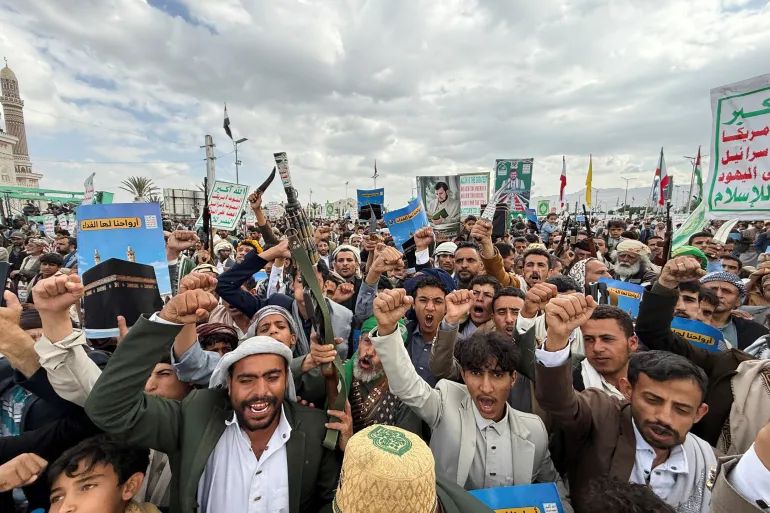
G7 foreign ministers condemn Houthi strikes on Saudi Arabia, urge an end to attacks on civilian shipping and call for Yemen peace talks.
G7 Urges Houthis to End Strikes on Saudi Arabia
The foreign ministers of the Group of Seven (G7) have strongly condemned continued attacks by Yemen’s Houthi movement against Saudi Arabia and called for an immediate end to military operations and threats targeting civilian shipping.
The statement was issued on Monday after an informal meeting of G7 foreign ministers on the sidelines of the United Nations General Assembly in New York. The ministers from the United States, United Kingdom, Canada, France, Germany, Italy and Japan described the continued Houthi strikes as unacceptable and warned that the ongoing escalation could threaten regional security and international trade.
G7 Calls for End to Houthi Attacks
The G7 foreign ministers urged the Houthis to immediately stop all military activities, threats and attacks against civilian vessels. They also called on the group to return to negotiations and engage with the political process in good faith.
The demand comes amid renewed concerns over the Yemen conflict and growing tensions across the Middle East. Attacks involving the Houthis have raised concerns about the security of commercial shipping routes and the potential impact on international trade.
The ministers emphasized that attacks on civilian shipping could have consequences beyond the Yemen conflict, particularly because the region is connected to major international maritime trade routes.
The G7 also called for efforts to prevent further escalation and encouraged all parties involved in the conflict to pursue diplomatic solutions.
G7 Accuses Iran of Supporting Houthis
The foreign ministers also directed criticism at Iran, accusing Tehran of providing military support and weapons to the Houthi movement.
According to the G7 statement, Iran’s continued support for the Houthis violates previous United Nations Security Council resolutions. The ministers warned that Iranian assistance to the group could contribute to further regional escalation.
The G7 described the alleged support as part of a broader pattern that could undermine international security, disrupt trade and increase instability across the Middle East.
Iran and the Houthis have previously rejected various accusations concerning their activities and have presented their positions differently from those of Western governments.
Rising Concerns Over Yemen Conflict
The latest escalation comes after a period of relative calm in Yemen following the UN-brokered ceasefire that began in 2022.
The ceasefire helped reduce fighting between the Iran-aligned Houthis and the Saudi-backed Yemeni government, although a comprehensive political settlement has not been reached.
Yemen remains divided between competing political and military forces, with the Houthis controlling large parts of the country’s north and west, including the capital, Sanaa. The internationally recognized Yemeni government has maintained control over other areas with support from regional allies.
The prolonged Yemen conflict has created a major humanitarian crisis and contributed to wider instability in the region.
Red Sea Shipping Remains a Major Concern
Houthi attacks involving commercial vessels have also increased international concern over maritime security in the Red Sea region. The waterway is an important route for global shipping, linking the Mediterranean Sea with the Indian Ocean through the Suez Canal and the Gulf of Aden.
Any sustained disruption to shipping could increase transportation costs, delay deliveries and place additional pressure on global supply chains.
The G7’s latest statement therefore links the Yemen conflict with broader international concerns over freedom of navigation, civilian safety and economic stability.
Diplomatic Pressure Intensifies
The call from G7 foreign ministers adds to international diplomatic pressure on the Houthis to halt military operations and return to political negotiations.
The ministers also stressed the importance of preventing further regional escalation. With tensions involving Yemen, Saudi Arabia and Iran affecting the wider Middle East, diplomatic efforts remain central to attempts to achieve a lasting political settlement.
The situation remains closely watched as governments assess the impact of Houthi attacks on regional security, Saudi Arabia, Yemen and international maritime trade.
A lasting reduction in violence would depend on developments within Yemen as well as the actions of regional and international powers involved in the conflict.