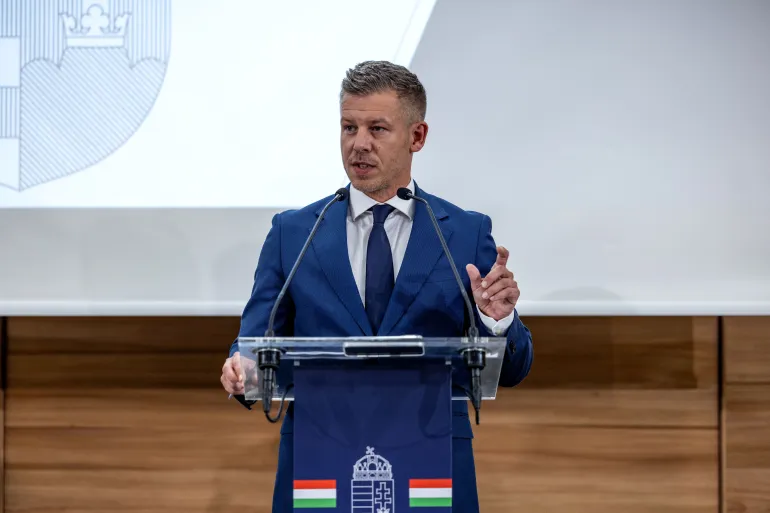
UNGA 81 highlights five major issues: Gaza, Iran, AI, UN reform and global cooperation shaping the future of international diplomacy.
UNGA 81: Five Key Takeaways From the General Debate
The 81st United Nations General Assembly (UNGA 81) concluded on September 28 after world leaders gathered in New York to discuss major global challenges, including artificial intelligence, the Israel-Palestine conflict, international security, Iran and the future of the United Nations.
The General Debate was held from September 22 to 26 and resumed on September 28. The central theme of the 81st session was “Restoring trust, managing transformation: a United Nations that delivers for all.”
Here are five major takeaways from UNGA 81.
1. Palestine and Gaza Remain Major Global Concerns
The Israel-Palestine conflict and the humanitarian situation in Gaza featured prominently in speeches during the UN General Assembly.
Several countries renewed calls for Palestinian sovereignty and support for a two-state solution. French President Emmanuel Macron urged international leaders to address the continuing humanitarian crisis in Gaza, while other governments also stressed the importance of Palestinian statehood and international law.
The Palestinian question remained closely connected to discussions about humanitarian assistance, reconstruction and the future administration of Gaza.
The UN Secretary-General also warned that conflicts across the Middle East were continuing to place civilians at risk and called on world leaders to pursue de-escalation and dialogue.
The General Assembly had also adopted a resolution allowing the State of Palestine to participate virtually in the high-level debate, with the measure passing by 152 votes to three.
2. Iran and Middle East Security Took Centre Stage
Iran, nuclear security and Middle East tensions were another important focus during UNGA 81.
Iranian President Masoud Pezeshkian said Iran had been acting in self-defence and maintained that the country should retain its right to peaceful nuclear technology. Iranian officials also held a series of diplomatic meetings with representatives from several countries during the summit.
US President Donald Trump, meanwhile, defended his administration’s approach to Iran and said Washington would not allow Tehran to develop nuclear weapons.
The contrasting positions highlighted the continuing diplomatic divide over Iran’s nuclear programme, regional security and the use of military force.
3. Artificial Intelligence Becomes a Central UN Issue
Artificial intelligence (AI) emerged as one of the defining issues of UNGA 81.
World leaders discussed both the opportunities and risks associated with rapidly developing AI technologies. Finnish President Alexander Stubb described AI as a technology with potentially far-reaching consequences for science, economics, politics, security and society.
UN officials emphasized the need for international cooperation, safety standards and responsible AI governance.
The scale of the discussion was notable. In his closing remarks, UN General Assembly President Khalilur Rahman said that 128 delegations addressed artificial intelligence during the debate, compared with only five delegations four years earlier.
The debate also exposed differences over regulation. Some governments called for international safeguards, while others emphasized technological innovation and national control over AI development.
4. UN Reform and International Cooperation Were Key Themes
Another major issue was the future of the United Nations and multilateral cooperation.
UN Secretary-General António Guterres warned that the international system is facing major tests involving peace and security, climate change, inequality and technological change.
The President of the 81st General Assembly, Khalilur Rahman, also called for a more effective, inclusive and financially sustainable UN. He emphasized the importance of accountability, cooperation and ensuring that the organization delivers practical results for people around the world.
The wider discussion reflected concerns about whether existing international institutions can effectively respond to conflicts, technological disruption and global economic challenges.
5. China Reaffirmed Its Position on Gaza and AI
Chinese President Xi Jinping did not personally address the UN General Debate this year. China was represented by Vice President Han Zheng.
Han reaffirmed Beijing’s position on respect for the sovereignty and security of Middle Eastern countries. He also called for post-conflict reconstruction in Gaza based on the principle of Palestinians governing Palestine and reiterated support for a two-state solution.
On artificial intelligence, China called for a people-centred approach and greater efforts to reduce the digital divide.
Conclusion
The UNGA 81 General Debate demonstrated how closely today’s major global challenges are connected. Gaza and the Israel-Palestine conflict, Iran and Middle East security, artificial intelligence, UN reform and international cooperation dominated discussions.
The closing debate also showed how quickly AI governance has moved to the centre of international diplomacy. At the same time, continuing conflicts and disagreements over international law demonstrated the difficulties facing global cooperation.
As the UN moves forward with its 81st session, the central question will be whether member states can translate these high-level discussions into practical action on peace, security, AI governance, sustainable development and international cooperation.