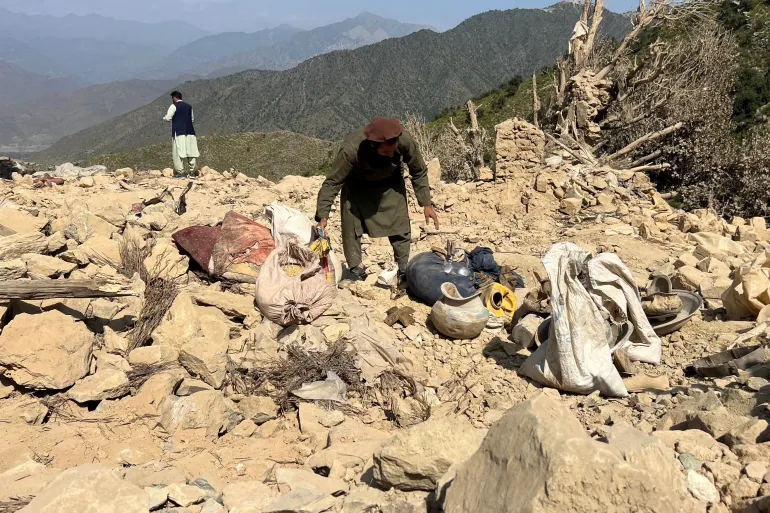
Pakistan says airstrikes in Afghanistan killed 22 fighters, while Kabul reports civilian deaths and injuries in Kunar and Helmand provinces.
Pakistan Airstrikes in Afghanistan Kill 22 Fighters, Kabul Says Civilians Died
Pakistan has carried out airstrikes inside Afghanistan, saying the attacks targeted armed-group camps and hideouts and killed an estimated 22 fighters. The strikes have further increased tensions between the two neighbouring countries after several months of relative calm.
Pakistan’s Ministry of Information said the military action targeted suspected positions used by armed groups in two locations. Pakistani authorities described the sites as camps and hideouts linked to fighters operating against Pakistan.
Afghanistan, however, has strongly rejected Pakistan’s account of the operation. Afghan government spokesman Zabihullah Mujahid said the attacks were carried out late on Wednesday in Kunar province in northeastern Afghanistan and Helmand province in the south.
According to Mujahid, at least nine people were killed and 11 others were wounded in the airstrikes. He said women and children were among those killed and claimed that three residential houses were destroyed.
The casualty figures and the identities of those killed could not be independently verified. The conflicting accounts highlight the growing tensions between Islamabad and Kabul, with both sides presenting different descriptions of the targets and consequences of the attacks.
Mujahid condemned the strikes and described them as an act of aggression. In a statement shared on social media, he accused Pakistan of violating accepted international principles and said the attacks had affected civilian homes.
The latest airstrikes come amid a renewed escalation in relations between Pakistan and Afghanistan. The two countries have experienced repeated tensions over security concerns, particularly the activities of armed groups operating along or near the shared border.
Pakistan has repeatedly accused Afghanistan of allowing armed groups, including the Tehrik-i-Taliban Pakistan (TTP), to maintain bases and hideouts on Afghan territory. Islamabad says fighters linked to the group have used Afghanistan as a base to plan and carry out attacks inside Pakistan.
The Afghan government has denied these allegations. Kabul has rejected claims that it allows armed groups to use its territory to launch attacks against Pakistan and has instead accused Islamabad of conducting military operations that put Afghan civilians at risk.
The dispute over the TTP has become one of the major sources of tension between the two governments. Pakistan has demanded that Afghan authorities take action against armed groups that Islamabad says are responsible for cross-border attacks. Afghanistan has repeatedly denied accusations that it provides sanctuary for militants targeting Pakistan.
The latest fighting also comes after a period in which tensions between the two countries had eased somewhat. The renewed military action could further complicate diplomatic efforts to address security concerns along the Pakistan-Afghanistan border.
Kunar and Helmand are geographically distant Afghan provinces with different security environments. Kunar, located in northeastern Afghanistan, lies close to Pakistan’s border and has historically been affected by armed conflict and militant activity. Helmand, in southern Afghanistan, has also experienced years of conflict involving various armed groups.
Pakistan’s claim that 22 fighters were killed and Afghanistan’s claim that nine people, including women and children, died remain disputed. No independent verification of the casualty figures was immediately available.
The contrasting accounts also underline the difficulty of establishing the exact impact of cross-border military operations in areas where access to affected communities can be limited.
The latest strikes are likely to add pressure to already strained relations between Islamabad and Kabul. Both governments face security concerns, while residents in border areas remain vulnerable to the consequences of military operations and armed-group activity.
For Pakistan, the central issue remains the threat posed by armed groups that it says operate from Afghan territory. For Afghanistan, the focus has been on what it describes as violations of its sovereignty and attacks on civilian areas.
The situation demonstrates the continuing security challenges along the Pakistan-Afghanistan border. Further developments will depend on how both governments respond to the latest strikes, casualty allegations and broader disputes over militant activity.
As tensions continue, accurate information about the targets, casualties and damage caused by the airstrikes remains important. Independent verification of the competing claims will be necessary to establish the full impact of the latest Pakistan airstrikes in Afghanistan.