Trump warns that closer Canada-EU ties could be hostile to the US, raising the prospect of heavy tariffs amid growing trade tensions.
Trump Warns Canada-EU Alliance Could Trigger Tariffs
US President Donald Trump has warned the European Union that closer ties between Canada and the bloc could lead to new tariffs, after European leaders proposed exploring a new form of “associate membership” for Canada.
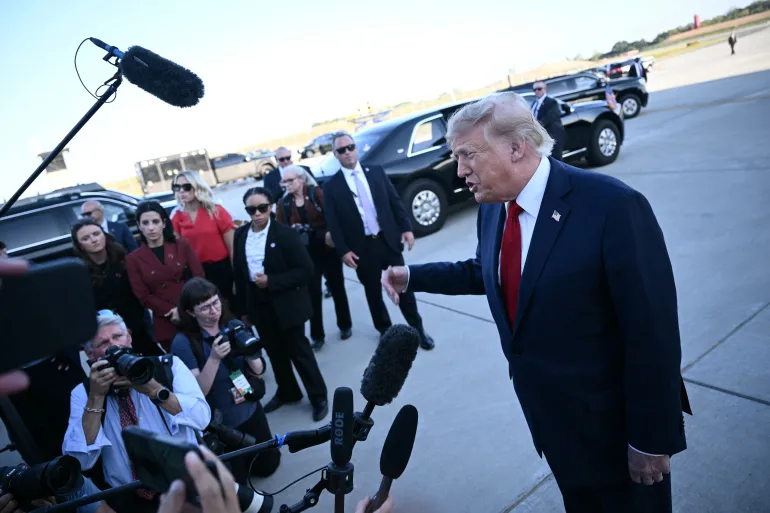
Trump said the United States would closely examine the purpose behind the proposal before deciding how to respond. Speaking to reporters in Charlotte, North Carolina, he suggested that Washington could impose “very heavy tariffs” if it concluded that the initiative was designed with hostile intentions toward the United States.
“If it’s a good intention, that’s fine,” Trump said. “If it’s a bad intention, we’ll put very heavy tariffs.”
The US president also raised the possibility of reducing trade with Europe across a range of sectors, adding another layer of uncertainty to already strained transatlantic economic relations.
Trump Questions Canada’s Potential EU Role
Trump dismissed the idea of Canada becoming connected to the European Union through an associate membership arrangement, describing the prospect as unrealistic. He also criticised Canada’s trade relationship with the United States, calling the country a poor trading partner.
His comments came shortly after European Commission President Ursula von der Leyen proposed considering a new relationship between Canada and the EU that could go beyond the bloc’s existing partnerships.
The proposal comes at a time when Canada is seeking stronger economic and strategic relationships with Europe as tensions with Washington continue to grow.
However, Canada becoming an EU associate member is still only an emerging idea. The European Union does not currently have an established associate membership category under its treaties, meaning the precise structure, rights and obligations of such a relationship would need to be negotiated.
What Would Canada-EU Associate Membership Mean?
At present, there is no clear definition of what EU associate membership for Canada would involve.
The arrangement could potentially provide a framework for deeper cooperation in areas such as trade, technology, defence, energy, critical minerals and Arctic security. However, no final model has been announced, and any formal proposal would require support from EU member states.
The uncertainty surrounding the concept means it is too early to determine how closely Canada could eventually become integrated with the European bloc.
Canada is also not seeking conventional EU membership. Prime Minister Mark Carney has previously described Ottawa’s objective as creating a “unique alliance” with Europe rather than joining the European Union.
Carney’s office welcomed the prospect of developing a stronger and more ambitious relationship with Europe, but did not specifically commit Canada to pursuing associate membership.
Canada Seeks Stronger Economic Ties With Europe
The proposed Canada-EU relationship comes as Ottawa attempts to diversify its international trade and reduce its economic dependence on the United States.
Canada and the EU are already discussing expanded cooperation across several strategic sectors. These include trade, digital technology, defence, energy, critical minerals and the Arctic.
Further discussions are expected at a Canada-EU summit scheduled to take place in Montreal next month. The meeting could provide an opportunity for both sides to clarify what a deeper strategic partnership might look like.
Canada’s efforts to strengthen ties with Europe are also taking place against the backdrop of an escalating US-Canada trade dispute. New tariffs and retaliatory measures between the two North American neighbours have increased pressure on businesses and policymakers.
US-Canada Trade Tensions Add to Uncertainty
The latest comments from Trump highlight the broader economic risks surrounding Canada’s efforts to build new international partnerships.
The United States remains Canada’s largest trading relationship, making any major shift in Ottawa’s trade strategy potentially significant for both economies. At the same time, Canada is seeking additional markets and strategic partnerships to lessen its exposure to changes in US trade policy.
A closer Canada-EU alliance could therefore become an important part of Ottawa’s broader strategy to expand economic and diplomatic cooperation beyond North America.
For the European Union, closer ties with Canada could also strengthen cooperation in areas considered strategically important, including energy security, critical minerals, technology and Arctic affairs.
For now, however, the idea of Canada becoming an EU associate member remains at an early stage. The details have yet to be negotiated, and it remains uncertain what formal status or commitments such an arrangement would eventually provide.
Trump’s warning adds another complication to the discussion, particularly as the United States and Canada continue to navigate significant trade tensions.
The coming Canada-EU talks and next month’s summit are likely to provide greater clarity on whether the proposed relationship develops into a formal associate membership framework or a broader strategic partnership between Canada and Europe.