Jamaica receives its first 22 third-country deportees from the US, raising questions about immigration policy, human rights and legal protections.
Jamaica Receives First Third-Country Deportees From the US
Jamaica has received its first group of third-country deportees from the United States, marking a new development in the Trump administration’s expanding immigration enforcement strategy. The arrival of 22 deportees has sparked debate over immigration policy, national security, human rights and the legal responsibilities of countries accepting migrants from the US.
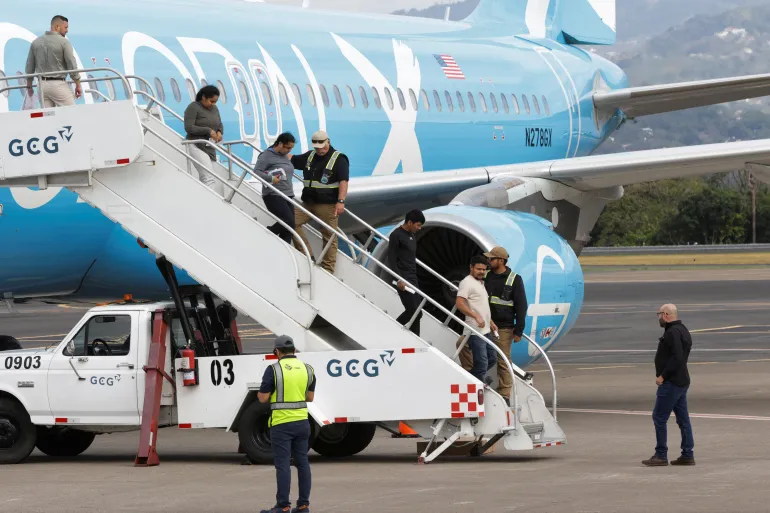
The deportees arrived at Norman Manley International Airport in Kingston on Tuesday. According to media reports, they were transferred onto a bus and taken to an undisclosed location. Authorities have not publicly provided extensive details about their identities or the arrangements following their arrival.
Third-country deportation involves sending individuals to a country other than their country of citizenship or origin. These arrangements have attracted criticism from human rights organisations, particularly when deportees have limited connections to the receiving country or face uncertainty about their future.
Jamaica’s participation reflects a broader US effort to establish international agreements that facilitate the removal of non-citizens as part of President Donald Trump’s mass deportation campaign.
What Is the US Third-Country Deportation Policy?
Third-country deportations allow the US government to transfer certain immigrants to countries that have agreed to receive them, rather than directly returning them to their home countries.
Supporters of these arrangements argue that international cooperation can help governments enforce immigration laws and manage deportations. However, critics question whether such transfers provide adequate protection for migrants who may face persecution, violence or other serious risks if they are subsequently sent elsewhere.
According to Third Country Deportation Watch, an advocacy initiative associated with Refugees International and Human Rights First, at least 35 countries have entered into third-country deportation agreements with the United States.
Reports have also indicated that the Trump administration allocated approximately $410 million to support these arrangements, highlighting the financial resources involved in expanding international deportation operations.
The policy has become a significant part of the administration’s efforts to increase immigration removals, although its implementation continues to face legal and political challenges.
Why Has Jamaica Agreed to Accept Deportees?
Jamaica signed a bilateral memorandum of understanding with the United States in June to facilitate third-country deportations.
Under the arrangement, Jamaica is expected to transfer incoming deportees to their countries of origin or other receiving countries after their arrival. The Jamaican government has also stated that it will not accept individuals with criminal records under the agreement.
Officials have described the arrangement as a transit mechanism rather than a programme intended for permanent settlement.
In a joint statement, Jamaica’s national security and foreign affairs ministries said the agreement was designed to facilitate the return of third-country nationals to their home countries or other destinations. They also indicated that the International Organization for Migration would support arrangements for the deportees’ care.
The government stated that Jamaica would not finance the arrangement itself.
However, questions remain about how deportees will be accommodated, how quickly onward transfers will take place and what safeguards will be available to individuals who cannot immediately return to their countries of origin.
Opposition Raises Concerns Over National Security
The agreement has drawn criticism from opposition politicians in Jamaica, who have questioned whether the arrangement could affect public safety, local communities and government services.
Opposition spokesperson on national security Fitz Jackson argued that Jamaicans should not be expected to trust an agreement that has not been publicly disclosed in full.
He also questioned why the deal had not been subjected to greater public debate, particularly given its potential implications for national security and immigration management.
Foreign Minister Kamina Johnson Smith responded that questions surrounding the arrangement had already been addressed. She also explained that the United States had not agreed to make the agreement public.
Johnson Smith stressed that Jamaica’s arrangement differs from those involving countries willing to accept deportees with criminal records.
The disagreement has intensified calls for greater transparency about the agreement’s terms, oversight procedures and protections for both deportees and Jamaican residents.
Human Rights and Legal Challenges in the United States
Third-country deportations have faced legal challenges in the United States, where immigration advocates argue that some individuals are being removed without adequate due process.
Due process generally refers to legal protections intended to ensure that government actions affecting individuals follow established procedures. In deportation cases, these protections can include opportunities to challenge removal decisions and present evidence of potential harm.
Critics argue that transferring migrants to third countries could expose them to further danger, particularly when receiving countries have security problems, ongoing conflicts or records of human rights abuses.
Countries previously involved in such arrangements, including South Sudan, have faced concerns related to conflict and human rights conditions.
Another major concern involves court orders that restrict the US government from returning particular individuals to countries where they could face persecution, torture or other serious harm.
Opponents argue that sending those individuals to a third country may circumvent the protections intended by such orders, especially if the receiving country later transfers them to the location they were originally protected from.
These concerns have contributed to ongoing legal disputes over the scope and legality of US third-country deportation agreements.
What Jamaica’s Deportation Deal Means for the Future
Jamaica’s acceptance of its first 22 deportees highlights the growing role of international partnerships in US immigration enforcement.
For the Jamaican government, the agreement is presented as a temporary transit arrangement supported by international migration assistance. For critics, however, the lack of public access to the full agreement raises questions about accountability, security and the treatment of vulnerable migrants.
The key issues will be whether deportees receive appropriate care, whether onward transfers comply with international legal obligations and whether individuals have meaningful opportunities to challenge decisions that could put them at risk.
As the United States expands its deportation partnerships, Jamaica’s experience could become an important example of the legal, humanitarian and political challenges facing countries that participate in third-country removal programmes.
Ultimately, the future of these arrangements will depend not only on immigration enforcement objectives but also on transparency, due process and the protection of fundamental human rights.