Donald Trump sparks controversy after saying government leakers should be shot, renewing debate over classified information and press freedom.
Trump Says Government Leakers Should Be Shot, Sparking Controversy
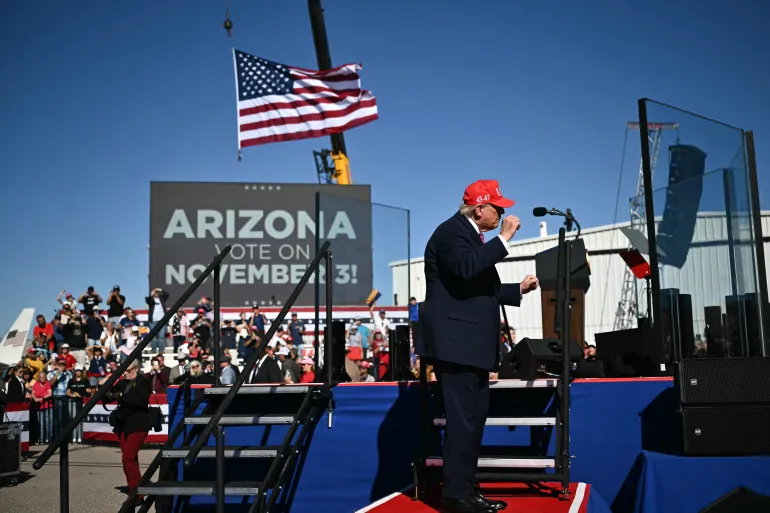
US President Donald Trump has sparked fresh controversy after suggesting that government officials who leak confidential information to the media should be shot. His remarks, delivered at a campaign rally in Bullhead City, Arizona, have renewed concerns about press freedom, government transparency and the treatment of whistleblowers in the United States.
Speaking to supporters ahead of the November 3 midterm elections, Trump argued that individuals who disclose sensitive military information should face severe punishment. He referred to historical practices involving the execution of people who revealed details about military operations, particularly information that could expose the timing of an attack.
“In my opinion, leakers should be shot,” Trump told the crowd, reinforcing his longstanding opposition to unauthorised disclosures of government information.
Trump Criticises Leaks About Iran Military Operation
Trump’s comments appeared to relate to Operation Midnight Hammer, the US military operation launched against Iranian nuclear facilities in June 2025 during the 12-day conflict between Israel and Iran.
Following the strikes, details from a preliminary intelligence assessment became public. The assessment reportedly indicated that Iran had moved some of its enriched uranium away from the targeted locations before the attacks. It also suggested that the damage to Iranian nuclear infrastructure might have been less extensive than Trump had publicly claimed.
The disclosures raised questions about the effectiveness of the military operation and the extent of the damage inflicted on Iran’s nuclear programme.
Trump appeared particularly concerned that information about the timing of the strikes had reached the public. He claimed that leaked details about the planned departure and arrival times of US forces had placed American military personnel at risk.
According to Trump, the disclosure forced officials to adjust the schedule of the bombing campaign by two days. He did not publicly establish who was responsible for the alleged leak.
The president argued that those responsible should face imprisonment or even execution, describing the disclosure of sensitive military information as a serious threat to national security.
Trump Calls for Tougher Punishment for Government Leakers
Trump has repeatedly called for strict action against government officials who provide confidential information to journalists. His latest remarks reflect a broader approach to controlling the release of classified material and identifying individuals suspected of leaking sensitive government documents.
After details of the intelligence assessment on the Iran strikes emerged, Trump accused Democratic lawmakers of being responsible for disclosing the information. He called for those involved to be prosecuted, although his public accusations did not establish individual responsibility.
The issue has become an increasingly prominent part of his administration’s approach to national security and internal investigations.
Officials across the administration and military have reportedly faced increased scrutiny as authorities attempt to identify the sources of unauthorised disclosures. Some personnel have been directed to undergo polygraph examinations as part of efforts to investigate suspected leaks.
These measures have raised questions about privacy, workplace pressure and the extent to which government agencies should investigate employees suspected of sharing confidential information.
Journalists Face Increased Scrutiny Over Confidential Sources
The Trump administration has also taken steps to identify the sources behind news reports containing sensitive government information.
Journalists and media organisations have faced legal demands seeking records that could help investigators determine who provided confidential information. Such measures have intensified the debate over the protection of journalistic sources and the public’s right to know about government activities.
Reports involving military operations, national security assessments and internal warnings about foreign policy decisions have become particularly contentious.
The administration has also attempted to introduce stricter conditions for journalists seeking access to the Pentagon. The proposed rules included restrictions on publishing information that officials had not authorised for release.
Many journalists refused to accept the new conditions, arguing that they could undermine independent reporting and limit scrutiny of military leadership. A federal court subsequently blocked significant parts of the requirements.
The dispute highlights the ongoing tension between protecting classified information and preserving the independence of the press in a democratic society.
Trump’s Longstanding Conflict With Leakers
Trump’s hostility towards government leaks predates his current term in office. During his first presidency, from 2017 to 2021, he frequently criticised officials who shared internal information with journalists.
His frustration intensified in 2020 after reports emerged that he had taken shelter in a White House bunker during racial justice protests. A former White House official later said Trump had called for individuals responsible for leaks to face execution.
His recent comments in Arizona appear consistent with that earlier position, demonstrating his continued determination to impose severe consequences on those who disclose confidential government information.
Trump described leakers as among the worst people in society and insisted that they should be dealt with forcefully.
Debate Over National Security and Press Freedom
The president’s remarks have renewed a broader debate about the balance between national security and freedom of expression in the United States.
Government officials argue that unauthorised disclosures of classified military information can compromise operations, expose personnel to danger and undermine national security. Information about the timing, location or objectives of military missions can be particularly sensitive when operations are ongoing.
However, critics of aggressive leak investigations warn that excessive punishment and pressure on journalists can discourage whistleblowers from exposing misconduct, policy failures or misleading official statements.
The controversy also raises questions about whether calls for extreme punishment against suspected leakers could create a chilling effect across government agencies and news organisations.
As the November 3 midterm elections approach, Trump’s comments are likely to remain part of the wider debate surrounding his administration’s national security policies, government accountability and relationship with the press.
The central issue remains how the United States can protect genuinely sensitive information without undermining democratic oversight, journalistic independence and the public’s ability to scrutinise decisions made by those in power.