Saudi Arabia intercepts three Houthi ballistic missiles targeting Riyadh and Khamis Mushait as Yemen fighting and displacement worsen.
Saudi Arabia Intercepts Three Houthi Ballistic Missiles
Saudi Arabia says its air defence forces intercepted and destroyed three ballistic missiles launched by Yemen’s Houthi rebels toward Saudi territory on Thursday. Two of the missiles were reportedly heading toward the capital, Riyadh, while another was directed toward Khamis Mushait near the Yemen border.
The Saudi-led coalition supporting Yemen’s internationally recognised government said the missiles were detected and intercepted before reaching their intended targets. Coalition spokesman Turki al-Maliki said two ballistic missiles were travelling toward Riyadh and another was heading toward Khamis Mushait.
The latest incident comes amid a sharp increase in Houthi attacks targeting Saudi Arabia and growing tensions across the region.
Missile Debris Damages Buildings in Riyadh
Saudi civil defence officials said debris from one of the intercepted missiles fell in Riyadh, causing material damage to a kindergarten and a medical clinic complex. Officials did not immediately report any deaths or injuries linked to the falling debris.
The incident has raised further concerns about the risks posed by missile interceptions over populated areas. Riyadh has increasingly become a focus of Houthi threats and missile launches in recent weeks.
The Houthi military spokesman, Yahya Saree, claimed that his group launched a ballistic missile toward King Khalid International Airport in Riyadh on Thursday afternoon. He claimed the missile reached its intended target, causing damage and disrupting air traffic.
The conflicting claims could not be independently verified.
Flights Disrupted at Riyadh Airport
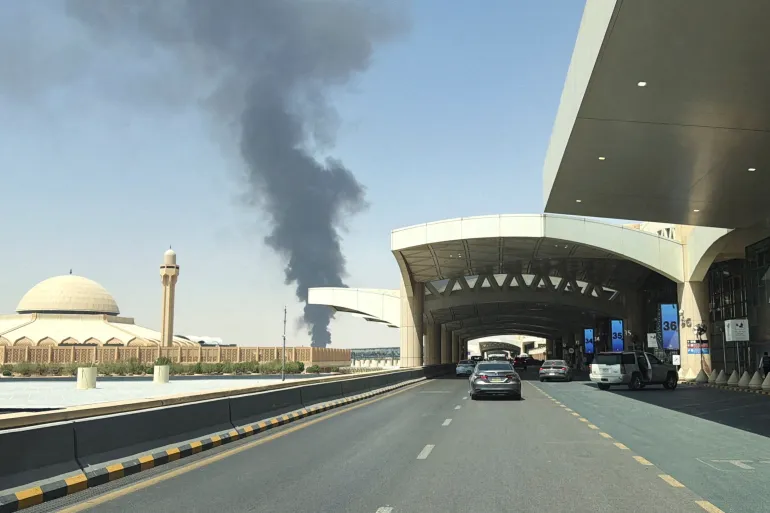
Several explosions were reportedly heard across Riyadh, including near King Khalid International Airport. Reports indicated that flights were temporarily disrupted following the incident.
The Houthis have recently warned airlines against operating in Saudi airspace. The group has said that aircraft flying over most parts of Saudi Arabia could be considered targets, while excluding flights operating over the holy cities of Mecca and Medina from the warning.
King Khalid International Airport in Riyadh and Abha International Airport have also faced recent attacks claimed by the Houthis.
Saudi aviation authorities previously reported that three foreign nationals were killed and 36 people were injured in attacks involving the airports earlier this week.
On September 18, Saudi coalition forces said they intercepted and destroyed a suspected Houthi ballistic missile launched toward Riyadh airport from Yemen.
The following day, an explosion was reported near King Khalid International Airport, with a large column of black smoke seen rising from an area believed to contain fuel storage facilities. The exact cause and extent of the damage remained unclear.
Fighting Intensifies Across Yemen
The latest missile attacks come as fighting inside Yemen is also intensifying.
Heavy clashes have been reported between forces supporting Yemen’s internationally recognised government and Houthi fighters in several areas of Taiz governorate, including al-Shamayatayn, al-Maafer and parts of the southern and western countryside.
Government forces are reportedly advancing toward al-Waziiya and the Kahboub Mountains, strategically important areas overlooking the Bab al-Mandeb Strait.
Houthi forces are also attempting to expand their presence into rural areas that had experienced relatively little fighting in recent years. Their reported objective is to establish or reopen supply routes as government forces put increasing pressure on Houthi positions around al-Kadaha and al-Waziiya.
The fighting is threatening important routes connecting Aden, Lahij and Taiz and could have wider implications for security around the Bab al-Mandeb, one of the world’s most strategically important maritime corridors.
Yemen Displacement Crisis Grows
The escalation in fighting has also triggered a major humanitarian crisis.
More than 200,000 people have reportedly been displaced from their homes since the conflict intensified in recent weeks. The figure represents a dramatic increase from approximately 76,000 displaced people recorded in mid-September.
Humanitarian officials have described the rapidly increasing displacement as alarming, warning that continued fighting could place additional pressure on already vulnerable communities.
The latest developments underline the growing security risks involving Saudi Arabia, Yemen and the wider Red Sea region. Continued Houthi missile attacks, clashes between Yemeni forces and the worsening displacement crisis could contribute to further regional instability in the coming weeks.