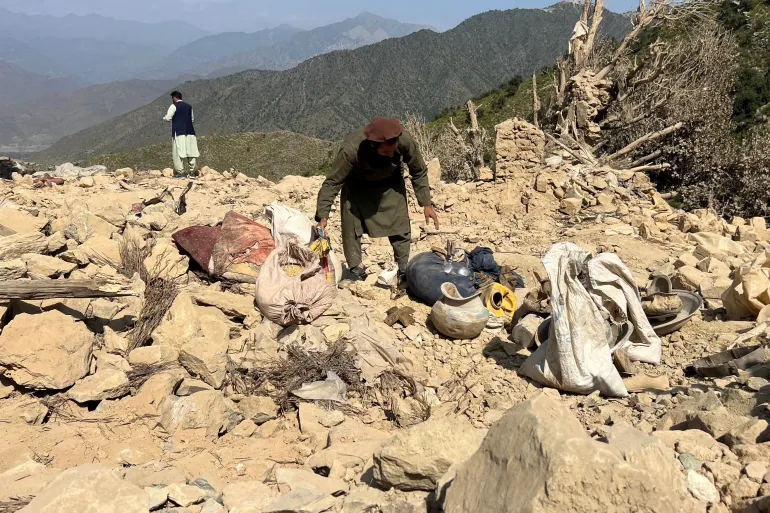
Pakistan launches air strikes on Afghanistan after drone attacks, escalating tensions over militants, border security and cross-border violence.
Pakistan Launches Air Strikes on Afghanistan After Drone Attacks
Pakistan has carried out air strikes on 10 locations in Afghanistan that it says were being used to store and launch drones involved in recent cross-border attacks. The latest strikes mark a sharp escalation in tensions between Pakistan and Afghanistan, following a series of attacks and military clashes along the border.
The Pakistani government said the air strikes were conducted on Thursday and targeted sites believed to be directly connected to drone attacks against Pakistan. Officials described the operation as precise and limited to what they called military targets.
Pakistan’s Information Minister Attaullah Tarar said the strikes were carried out in response to what Islamabad described as an unlawful drone incursion into Pakistani territory. He said the drone attacks represented a violation of Pakistan’s sovereignty and territorial integrity.
The latest confrontation comes amid growing tensions between Pakistan and Afghanistan over armed groups operating along the border. Islamabad has repeatedly accused the Afghan Taliban government of allowing anti-Pakistan militants to operate from Afghan territory and launch attacks inside Pakistan.
Afghanistan, however, rejects the allegations. Taliban officials have denied that their government launched drones against Pakistan and have maintained that attacks inside Pakistan are an internal security issue.
Air Strikes Reported in Khost and Kandahar
The Pakistani air strikes reportedly targeted several areas of Khost province in southeastern Afghanistan. A spokesperson for the Khost governor said there were no casualties reported in the province following the strikes.
An air strike was also reported in Kandahar city in southern Afghanistan. A local resident said a jet was heard before a large explosion occurred, followed by a fire in the centre of the city.
The reports of strikes in multiple Afghan locations have added to concerns that the recent deterioration in Pakistan-Afghanistan relations could develop into another period of sustained military confrontation.
The latest escalation follows an attack on a police facility in northwestern Pakistan that killed at least 21 people. A Pakistan Taliban faction claimed responsibility for the attack and the gun battle that followed.
The incident reignited tensions between the two neighbouring countries after almost three months of relative calm.
Pakistan and Afghanistan Tensions Escalate
Earlier in the week, Pakistan also carried out air strikes against three locations in northeastern Afghanistan. Afghan officials said the attacks in Nurgal district of Kunar province killed three civilians.
Pakistan said its military operation targeted militants and claimed that 28 “terrorists” were killed. The two sides have continued to provide different accounts of military operations and casualties, highlighting the growing divide between Islamabad and Kabul.
Pakistan has long been concerned about attacks by the Tehrik-e-Taliban Pakistan and other armed groups operating near the Afghanistan-Pakistan border. Islamabad argues that militants use Afghan territory as a base for planning and carrying out attacks inside Pakistan.
The Taliban government has denied providing safe havens to groups carrying out attacks against Pakistan and has urged Islamabad to address its own internal security problems.
Regional Mediation Efforts Under Pressure
The latest Pakistan-Afghanistan conflict could also complicate diplomatic efforts aimed at reducing tensions between the two countries.
China, Türkiye, Qatar and Saudi Arabia have been involved in diplomatic efforts to encourage dialogue and establish a lasting peace between Islamabad and Kabul. Continued military action could make those efforts more difficult as both sides face growing pressure over border security and militant attacks.
Relations between Pakistan and Afghanistan have deteriorated significantly since the major fighting in February, which was among the most serious military confrontations between the two countries in recent years.
The latest air strikes and drone attacks indicate that the dispute remains unresolved. With accusations continuing on both sides, concerns are growing that further attacks could lead to another cycle of cross-border military action.
For residents living near the Afghanistan-Pakistan border, the renewed tensions have raised fears of further violence, displacement and disruption. The situation remains closely linked to broader concerns about militant activity, border security and the future of relations between the two neighbouring countries.