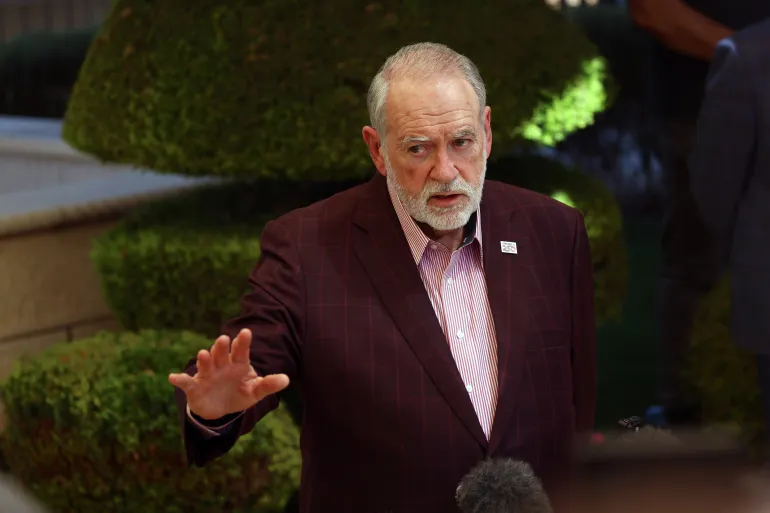
Mike Huckabee blames biblical illiteracy for declining US support for Israel as polls show rising criticism of Israel and Netanyahu among Americans.
Huckabee Blames Biblical Illiteracy for Declining Israel Support in US
US Ambassador to Israel Mike Huckabee has blamed what he describes as a lack of “biblical literacy” for the growing criticism of Israel among Americans, arguing that several factors have contributed to the decline in public support.
In a recent interview, Huckabee identified what he sees as three major reasons for changing attitudes toward Israel: misinformation and foreign propaganda, hostility toward people who believe in God and religious principles, and declining familiarity with the Bible.
Huckabee argued that these factors have combined to create a more negative perception of Israel in the United States. He suggested that Americans who better understand the Bible and the history of Israel would be more likely to view the country favorably.
His comments come as public opinion on Israel and Israeli Prime Minister Benjamin Netanyahu has become increasingly divided in the United States.
US Public Opinion on Israel Is Changing
Recent polling shows that unfavorable views of Israel have increased among American adults. A national survey conducted in March 2026 found that 60% of US adults held an unfavorable opinion of Israel, compared with 37% who expressed a favorable view. The same survey found that 59% had little or no confidence in Netanyahu to do the right thing regarding world affairs.
The figures also reveal significant differences between religious and political groups. White evangelical Protestants remain considerably more supportive of Israel than many other religious groups, with 65% expressing a favorable opinion of the country.
Among younger Americans, however, views of Israel and Netanyahu are generally more negative. The shift has become an increasingly important part of the wider debate over US foreign policy and Washington’s relationship with Israel.
Debate Over Gaza and Genocide Claims
Huckabee has rejected accusations that Israel is committing genocide in Gaza and has also disputed descriptions of Israel as an apartheid state. He has argued that Americans should examine what he considers to be the facts before reaching conclusions about Israel’s conduct during the war.
The issue remains highly contested.
A July 2026 national survey found that 31% of US adults believed Israel’s military actions in Gaza constituted genocide, while 20% said they did not. Nearly half, or 49%, said they did not know enough about the situation to give an opinion.
The findings also showed a substantial partisan divide. About 52% of Democrats said Israel had committed genocide against Palestinians, compared with 13% of Republicans. Israel has rejected genocide allegations.
These disagreements have made the Israel-Gaza conflict a major issue in American political debate, particularly among younger voters and Democrats.
Netanyahu Faces Growing US Criticism
Netanyahu has also experienced declining confidence among Americans. The March 2026 polling found that only 27% of US adults had a lot or some confidence in him to handle international affairs, while 59% expressed little or no confidence.
The debate has increasingly extended into US local politics, including New York City.
Mayor Zohran Mamdani has been one of Netanyahu’s most prominent American critics. Mamdani has said he opposes antisemitism and other forms of hatred and bigotry while maintaining strong criticism of Israel’s actions in Gaza.
During his campaign, Mamdani pledged to pursue the International Criminal Court’s arrest warrant for Netanyahu if the Israeli prime minister visited New York. After reviewing the legal question, however, his administration concluded that New York City did not have independent authority to enforce the warrant. Mamdani subsequently called on federal authorities to take action.
Netanyahu and Mamdani Clash at the UN
The dispute intensified during Netanyahu’s September 2026 address to the United Nations General Assembly.
Netanyahu criticized Mamdani and claimed that many Jewish residents no longer feel safe in New York. Mamdani has rejected accusations that his criticism of Israel amounts to antisemitism and has continued to distinguish opposition to Israeli government policies from hostility toward Jewish people.
The confrontation reflects a broader political debate over Israel’s relationship with the United States and the future of American support.
For Huckabee, the decline in support is partly a consequence of declining biblical knowledge, misinformation and changing attitudes toward religion. For critics of Israel, however, polling suggests that concerns about the Gaza war, humanitarian conditions and Israeli government policy are important factors shaping public opinion.
As the debate continues, US attitudes toward Israel are likely to remain closely connected to developments in Gaza, American domestic politics, religious beliefs and the policies of the Israeli government.

