Germany and Russia hold rare talks on Ukraine, Black Sea grain exports, ceasefire efforts, energy security and rising European tensions.
German and Russian Foreign Ministers Hold Rare Talks Amid Rising Tensions
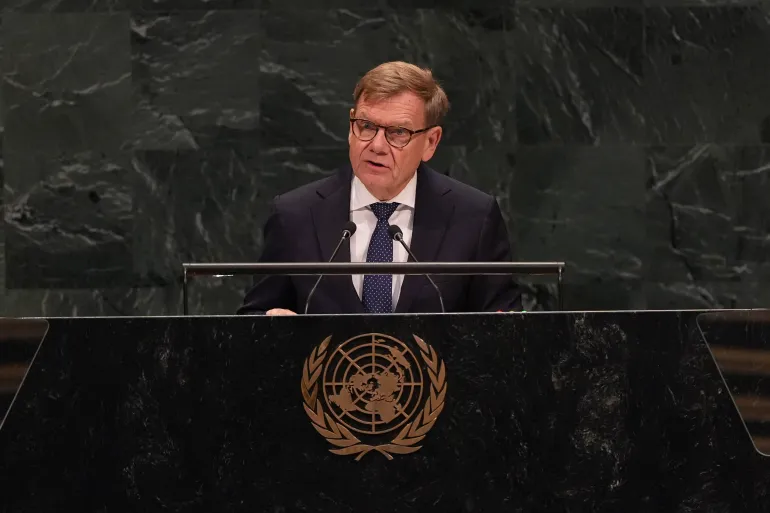
Germany’s Foreign Minister Johann Wadephul and Russian Foreign Minister Sergey Lavrov held rare diplomatic talks in New York as tensions between Germany, Russia and NATO continue to rise.
The meeting took place on the sidelines of the United Nations General Assembly on Saturday and marked the first direct talks between the German and Russian foreign ministers since Russia’s full-scale invasion of Ukraine in 2022.
According to Russian officials, the meeting was requested by Germany and took place shortly before Lavrov addressed world leaders at the UN General Assembly.
Germany Calls on Russia to End Escalation
During the meeting, Wadephul urged Russia to abandon what Germany described as a dangerous path of escalation involving Germany, Europe and NATO.
The German foreign minister also called for an immediate and complete ceasefire in Ukraine, with particular attention to the protection of grain exports and energy infrastructure.
The talks come at a time when diplomatic relations between Berlin and Moscow remain severely strained following Russia’s invasion of Ukraine.
Relations have deteriorated further in recent weeks following a drone incident at Leipzig Airport in eastern Germany. German authorities have blamed Russia for the incident, while Moscow has denied any involvement and accused Berlin of presenting fabricated evidence.
European governments have also raised concerns about suspected Russian involvement in drone incidents near airports, military installations and critical infrastructure in several countries.
Lavrov Criticizes Germany’s Military Policy
Following his meeting with Wadephul, Lavrov criticized Germany’s approach to the Ukraine war and its broader security policy.
In his address to the UN General Assembly, Lavrov accused Germany of being one of Ukraine’s main supporters and said Berlin was seeking a larger military role in Europe.
He questioned whether German leaders understood the possible consequences of their policies and referred to the historical lessons of World War II.
Afterward, Lavrov said the meeting with Wadephul had not produced new information because, in his view, Germany’s position had already been publicly stated.
Despite the disagreement, both sides confirmed that the ministers discussed bilateral relations and the ongoing war in Ukraine.
Black Sea Grain Exports Discussed
One of the important issues raised during the meeting was the future of grain exports through the Black Sea.
Wadephul urged Lavrov to take steps toward reaching an agreement that would allow grain shipments to continue safely through the region.
The issue has become increasingly important as attacks on ships and port infrastructure have disrupted commercial activity in the Black Sea.
International diplomatic efforts are underway to improve the security of maritime routes and restore the movement of agricultural products and energy resources.
Lavrov said Russia had held discussions with India, Egypt and Türkiye regarding proposals aimed at ensuring safe navigation in the Black Sea.
However, he said further discussions with Ukraine would be necessary to establish practical arrangements for maritime security.
Russia has accused Ukraine of carrying out attacks against vessels, while Kyiv has said it remains open to agreements and has blamed Russia for the wider consequences of the war and its invasion.
Germany Reaffirms Support for Ukraine
After the meeting, Wadephul informed European partners about his discussion with Lavrov.
He said the meeting provided an opportunity to restate Germany’s position on Russia’s war against Ukraine and to call for an immediate ceasefire.
Germany also emphasized the importance of protecting grain exports and energy infrastructure as part of efforts to reduce the humanitarian and economic consequences of the conflict.
The rare meeting between the German and Russian foreign ministers does not signal a major breakthrough in relations, but it represents a direct diplomatic contact between two governments whose relationship has deteriorated sharply since 2022.
The discussions also highlight the continuing international focus on a possible ceasefire, Black Sea security, grain exports and protection of critical energy infrastructure.
With the war in Ukraine continuing and tensions between Russia, Germany and other European countries remaining high, diplomatic channels could play an important role in addressing issues that affect regional security, food supplies and international trade.
For now, however, significant disagreements remain between Moscow and Berlin over the war in Ukraine, European security and Russia’s relationship with NATO and the wider European security system.

