A new Trump “final battle” ad funded by taxpayers sparks debate over government spending, political messaging and the upcoming midterms.
Trump “Final Battle” Ad Sparks Taxpayer Funds Deb
The White House has launched another taxpayer-funded television advertisement featuring President Donald Trump, drawing renewed attention to government spending, political messaging and the use of presidential imagery ahead of the November midterm elections.
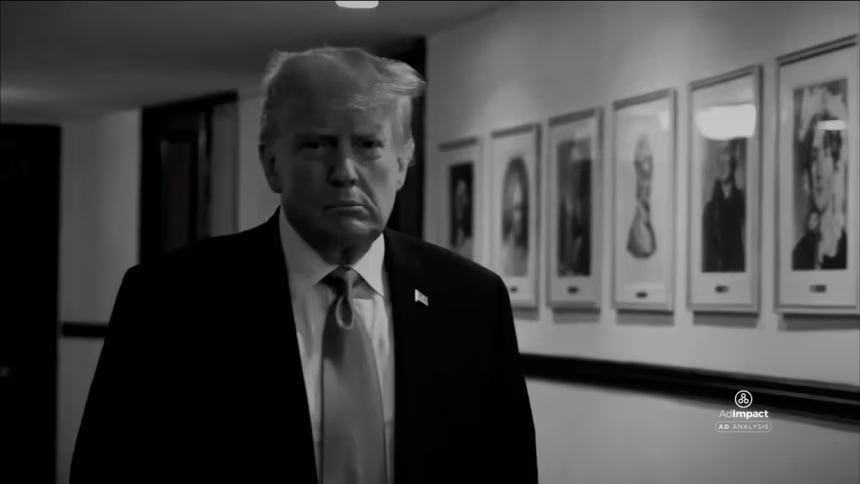
The latest advertisement features footage of Trump walking through a hallway while his voice warns that the country is entering a “final battle.” He speaks about defeating communists, Marxists and fascists, while also attacking what he describes as a political establishment that dislikes the country.
The commercial has aired during major NFL broadcasts, putting the message in front of a large television audience at a time when political attention is increasing ahead of the midterm elections.
The new commercial is the third government-funded advertisement featuring Trump to emerge in recent days. The advertisements have generated questions about whether taxpayer money is being used for a public information campaign or for messaging that could benefit the president and his political movement.
The White House has defended the advertising campaign as a series of public service announcements rather than political campaign advertisements. Officials have compared the commercials with government-funded public information campaigns used by previous administrations, including advertisements related to healthcare programs and public health initiatives.
The administration has also described the latest messaging as educational and patriotic, arguing that the advertisements are intended to promote national pride and highlight the country’s achievements.
However, the timing of the advertisements has attracted scrutiny because they are being broadcast only weeks before the November midterm elections. The use of Trump’s image, voice and political language has raised questions about the distinction between government communications and campaign-style political advertising.
The latest commercial is particularly notable because much of its content closely resembles a video Trump previously released during his presidential campaign. That earlier version contained additional campaign-related material, including branding and a contact number for supporters. In contrast, the government-funded version carries a notice identifying it as paid for by the US government.
Another recently aired advertisement uses rapid images and video of Trump while promoting what it describes as accomplishments of his administration. The commercial highlights issues such as American manufacturing and economic activity while using Trump’s voice as the central narration.
A separate government-funded advertisement features Trump at Mount Rushmore and includes audio in which he describes the country’s achievements in highly celebratory terms.
The growing number of advertisements has prompted government watchdogs and political observers to question how taxpayer-funded communications should be used during an election season.
Critics argue that government advertising should provide information about public programs, services or policies rather than promote the public image of an elected official. They have questioned why taxpayer money should be used for advertisements featuring a sitting president so close to a national election.
Supporters of the administration’s approach maintain that the advertisements are legitimate government communications. From that perspective, highlighting national achievements and encouraging patriotism can be considered part of a broader public information effort rather than direct campaign activity.
The debate ultimately centers on how government-funded advertising should be separated from political campaigning. While presidents routinely appear in official government communications, the issue becomes more complicated when the content uses campaign-style language, personal imagery or messages closely associated with a political movement.
The advertisements also come at a politically significant moment. With the midterm elections approaching, television advertising and political messaging are expected to receive increased public attention.
The controversy surrounding Trump’s latest “final battle” advertisement therefore extends beyond the commercial itself. It raises broader questions about taxpayer-funded government advertising, presidential communication, political messaging and the boundaries between official government activity and election-related campaigning.
As more government-funded advertisements appear, scrutiny is likely to continue over how they are financed, what purpose they serve and whether their content meets the standards expected of official public communications.