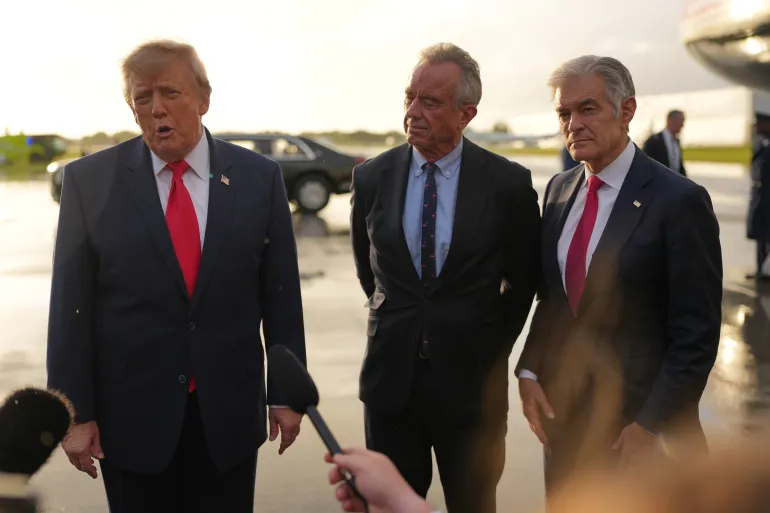
Donald Trump endorses Benjamin Netanyahu ahead of Israel’s October 27 election, highlighting Iran, regional security and a closely contested race.
Trump Endorses Netanyahu Ahead of Crucial Israeli Election
U.S. President Donald Trump has publicly endorsed Israeli Prime Minister Benjamin Netanyahu for another term, throwing his support behind the longtime political ally just nine days before Israel’s parliamentary election on October 27. The endorsement highlights the importance of the U.S.-Israel relationship as Netanyahu faces a competitive campaign shaped by security concerns, regional conflict and growing political opposition.
Trump announced his support in a post on his Truth Social platform on Sunday, praising Netanyahu’s leadership and describing him as a strong partner in confronting Iran. The statement marks a shift from Trump’s earlier reluctance to explicitly back the Israeli prime minister’s reelection bid.
According to reporting by Reuters and Al Jazeera, the endorsement comes at a consequential moment for Netanyahu, whose Likud party and its political allies are seeking to retain power amid uncertainty over the composition of the next Israeli government.
Trump Backs Netanyahu Nine Days Before the Vote
In his social media statement, Trump praised Netanyahu’s record under pressure and emphasized their partnership in confronting the Iranian government. He presented the Israeli leader as a capable ally and formally declared his support for Netanyahu’s reelection campaign.
The endorsement followed weeks of uncertainty about whether Trump would intervene directly in the Israeli election. Despite his longstanding relationship with Netanyahu, the U.S. president had previously avoided answering repeated questions about whether Israelis should give the prime minister another term.
In an interview with Time magazine published on October 1, Trump focused instead on his administration’s support for Israel and his own popularity among Israelis. He also discussed the threat posed by Iran without explicitly endorsing Netanyahu.
Al Jazeera reported on October 13 that Trump was still withholding a formal endorsement as the Israeli campaign intensified. His October 18 announcement therefore represents a notable change in his public position shortly before voters head to the polls.
Iran and Regional Security at the Center of the Message
Trump’s endorsement placed particular emphasis on the confrontation with Iran, an issue that has become central to the relationship between Washington and Jerusalem.
The two leaders have cooperated closely on Israeli security and regional policy. However, their relationship has also experienced tensions over military strategy and the handling of conflicts involving Iran and Gaza, according to recent reporting by the Associated Press.
Trump’s latest statement portrayed Netanyahu as an important partner in confronting Tehran. It also suggested that the future direction of U.S.-Israeli cooperation could depend partly on the outcome of Israel’s election.
The regional security environment has added pressure to the campaign. The conflict involving Iran and the continuing consequences of the war in Gaza have intensified debate over Israel’s military priorities, diplomatic relationships and long-term security arrangements.
For Netanyahu, his relationship with the American president is an important part of his political record. He has frequently emphasized his ability to maintain close ties with Washington and secure American backing on issues he considers essential to Israel’s national security.
However, Trump’s endorsement does not guarantee that Israeli voters will support Netanyahu or that his political bloc will secure enough parliamentary seats to form the next government.
Netanyahu Faces a Competitive Election
Israel’s October 27 election is the country’s first national vote since the Hamas-led attacks of October 7, 2023, which triggered a prolonged regional crisis and a devastating war in Gaza.
Netanyahu’s Likud party leads a right-wing political bloc that is seeking to maintain control of the government. The prime minister faces opposition from centrist political figures, including Gadi Eisenkot, who has emerged as a significant contender in efforts to build an alternative governing coalition.
Recent reports have indicated that Netanyahu’s allies could struggle to win the parliamentary majority required to form a government. Under Israel’s parliamentary system, voters elect representatives to the Knesset, and political parties generally negotiate to assemble a coalition capable of commanding majority support.
This means that winning the largest share of votes does not automatically ensure that a party leader becomes prime minister. The ability to secure coalition partners is often decisive in determining who governs.
The election will therefore test both Netanyahu’s personal political standing and the strength of the broader alliance that has supported his government.
A Longstanding Alliance With Political Complications
Trump and Netanyahu have maintained a close political relationship for years. During Trump’s first presidency, the United States adopted several policies welcomed by Netanyahu’s government, including moving the U.S. embassy from Tel Aviv to Jerusalem and recognizing Israeli sovereignty over the Golan Heights.
Their relationship has remained prominent during Trump’s second presidency, with repeated meetings and public expressions of support. Netanyahu has sought to present this partnership as evidence of his ability to maintain strong ties with Israel’s most important international ally.
Nevertheless, the relationship has not been free of disagreements. Reporting by the Associated Press has described tensions involving Iran and negotiations related to Gaza, illustrating that close political ties do not necessarily mean the two governments agree on every strategic decision.
Trump’s decision to endorse Netanyahu also comes amid political debate in the United States about Washington’s involvement in the Middle East. The regional conflict has generated concerns about security, economic consequences and the future course of American foreign policy.
The extent to which Trump’s backing will influence Israeli voters remains uncertain. His public support may reinforce Netanyahu’s argument that he can maintain a strong relationship with Washington, but domestic concerns and coalition arithmetic will also shape the election outcome.
What Happens Next?
With Israel’s parliamentary election scheduled for October 27, Netanyahu and his rivals have limited time to persuade voters and strengthen their respective political alliances. Trump’s endorsement adds a significant international development to the final stretch of the campaign, but the result will ultimately depend on Israeli voters and subsequent coalition negotiations.
As of October 18, no election result has been determined. The immediate focus remains on the final days of campaigning, the competing parties’ ability to build support and whether Netanyahu’s Likud-led bloc can assemble a governing majority.
The vote will help determine Israel’s political leadership at a time of continuing regional instability. Trump’s intervention has made his preference clear, but whether that support translates into a new term for Netanyahu will only become apparent after the election and the process of forming a government.