Italian police used tear gas and water cannons during cost-of-living protests in Milan and Bologna, with arrests and injuries reported on October 17.
Italian Police Clash With Cost-of-Living Protesters in Milan and Bologna
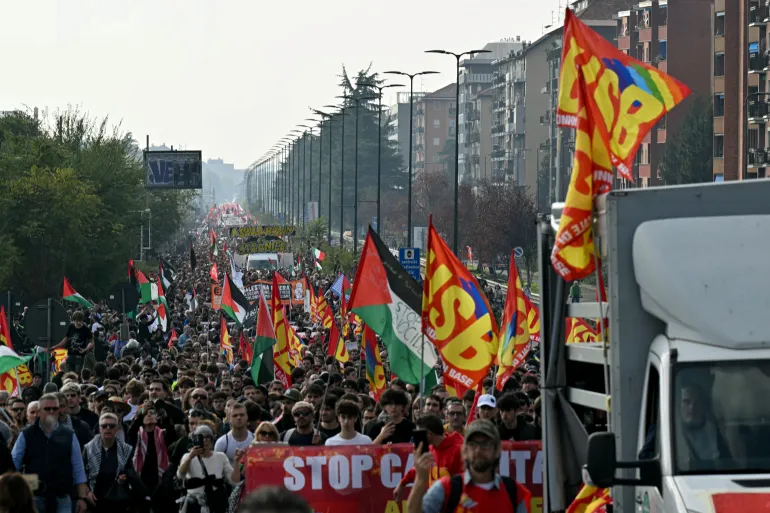
Italian police used tear gas and water cannons to disperse demonstrators during cost-of-living protests in Milan and Bologna on Saturday, October 17, after some gatherings turned violent. Authorities in Bologna arrested seven people, while clashes in Milan disrupted the city centre, forced shops to close temporarily and led to the closure of a major metro station, according to reports cited by Reuters and Italian media.
The unrest came amid growing public frustration over living costs and declining public services in parts of Europe. Italian Prime Minister Giorgia Meloni condemned the violence, stressing that peaceful demonstrations are a democratic right but that public disorder is unacceptable.
Clashes Erupt in Central Milan
Tensions escalated in Milan’s Piazza del Duomo, the square surrounding the city’s famous Gothic cathedral, when demonstrators threw stones and other objects at police, according to Italian media reports cited by Reuters.
Officers responded with tear gas as the confrontation developed in one of the city’s busiest public areas. Police wearing riot gear also moved to clear hooded demonstrators from the Galleria Vittorio Emanuele II, an upscale shopping arcade adjoining the cathedral square.
The disorder affected normal activity in central Milan. Several shops lowered their shutters as a precaution, while tourists moved away from the area. The Duomo metro station was temporarily closed during the clashes.
Several people were reported injured, and arrests were made, although the initial Reuters report did not provide a confirmed total for injuries or detentions in Milan.
Bologna Police Use Water Cannons, Make Arrests
Milan was not the only Italian city affected by the demonstrations. In Bologna, another protest over the rising cost of living descended into violence, prompting police to deploy water cannons to disperse the crowd.
The ANSA news agency reported that officers made seven arrests following the unrest. The available initial reporting did not provide a complete account of the injuries or the circumstances surrounding each arrest.
The events highlighted the difficulties facing authorities as public demonstrations over economic pressures spill into confrontations with law enforcement. While the protests centred on concerns about living costs, the violence disrupted public spaces and required police intervention in both cities.
Meloni Condemns Violence During Protests
Italian Prime Minister Giorgia Meloni publicly denounced the violence as authorities dealt with the clashes. Her response came as the country approached another election year, adding political significance to demonstrations driven by economic concerns.
In a statement posted on X, Meloni defended the right to demonstrate while rejecting the use of violence in public spaces.
Her remarks underscored the distinction between peaceful protest and violent conduct. The demonstrations raised concerns about the cost of living, but the confrontations in Milan and Bologna shifted attention toward public safety, damage prevention and the response of law enforcement.
The initial reports did not establish that all demonstrators participated in the violence. The clashes were reported after groups broke away from the broader cost-of-living protest in Milan, highlighting the importance of distinguishing between peaceful participants and those involved in confrontations with police.
Rising Living Costs Fuel Public Discontent
The protests took place against a wider backdrop of economic pressure and dissatisfaction with public services across Europe.
Rising household expenses can place pressure on workers and families, particularly when the cost of essential goods and services outpaces their ability to meet everyday expenses. Concerns about public services can add to frustration and prompt calls for better living and working conditions.
Although the available reporting did not provide a detailed breakdown of the demonstrators’ demands in each Italian city, the immediate focus of the gatherings was the high cost of living.
The demonstrations also reflected broader concerns about economic conditions that have prompted public mobilisation elsewhere in Europe. However, the causes and circumstances of individual protests can differ, and the reported clashes alone do not establish that demonstrators in different countries share identical political objectives.
Protests in Italy Echo Unrest in France
The Italian unrest followed large demonstrations in neighbouring France on Saturday, where tens of thousands of people took to the streets over rising expenses and concerns about deteriorating public services.
Reuters reported that the French demonstrations included some of the country’s most violent protests in years. The parallel developments placed the incidents in Milan and Bologna within a broader period of public discontent across Europe.
Nevertheless, the events in Italy and France should be understood in their respective national contexts. The reports establish a common backdrop of economic grievances, but do not demonstrate that the demonstrations were coordinated or organised as part of a single movement.
The unrest also illustrates the challenge facing governments as they respond to public demands while maintaining order. Authorities must manage demonstrations in busy urban centres, protect residents and visitors, and respond to violence without treating peaceful protest itself as unlawful.
What Happens Next?
As of October 18, 2026, the reported clashes had resulted in seven arrests in Bologna, while several people were reported injured and additional arrests were reported in Milan. The Duomo metro station had been closed during the disturbances, and businesses in central Milan had temporarily shut their doors.
The initial reports did not establish a final, comprehensive tally of injuries and arrests across both cities or provide a detailed account of any subsequent legal proceedings. Further official information would be needed to clarify the full impact of the unrest.
For now, the incidents have brought renewed attention to economic dissatisfaction in Italy and the difficulties of managing large public demonstrations when some participants engage in violence. The immediate priority remains establishing the full extent of the disturbances and determining what further action authorities will take.