Sudan’s army claims deadly airstrikes in Nyala killed dozens of RSF fighters, while the paramilitary group reports 30 civilian deaths at a livestock market.
Sudan Army Airstrikes in Nyala: RSF Reports Civilian Deaths
The conflict between the Sudanese army and the Rapid Support Forces (RSF) has intensified following a series of airstrikes on Nyala, the capital of South Darfur in southwestern Sudan. The Sudanese military claims that its latest attacks killed dozens of RSF fighters and destroyed key command centres. However, the paramilitary group has accused the army of carrying out a deadly drone strike on a crowded livestock market, allegedly killing 30 civilians.
The competing claims highlight the growing risks facing civilians as Sudan’s civil war continues to spread across multiple regions. The latest violence also underscores the increasing use of drone warfare in the ongoing struggle for territorial control.
Sudanese Army Claims Dozens of RSF Fighters Killed
According to a statement from the Sudanese army, Friday’s airstrikes targeted RSF positions and command centres in Nyala. The city serves as the capital of South Darfur and has become an important political and military stronghold for the paramilitary group.
The army said the operation was part of its broader efforts to weaken RSF military capabilities and regain territory controlled by the group. Nyala holds strategic importance because it is the centre of the RSF’s self-declared administration in the region.
The military has increasingly relied on air and drone attacks as it attempts to challenge RSF control across Darfur. However, the full extent of the damage caused by the latest strikes and the number of RSF fighters killed have not been independently verified.
The RSF has not confirmed or denied whether separate attacks destroyed its command facilities or killed its fighters.
RSF Accuses Sudan Army of Killing 30 Civilians
While the Sudanese army described its operation as a strike against military targets, the RSF alleged that one of the attacks hit a busy livestock market in Nyala.
The paramilitary group claimed that 30 civilians were killed in the drone attack, including 17 women and five children. If confirmed, the reported deaths would represent another serious incident involving civilian casualties in Sudan’s ongoing conflict.
Markets are essential gathering places for local communities, particularly in areas affected by displacement, food shortages and economic disruption. Attacks on these locations can have devastating consequences for families already struggling to access basic necessities.
A Sudanese human rights group, Emergency Lawyers, also reported that a market in Nyala was struck on Friday. The organisation stated that the drone involved was affiliated with the Sudanese army.
However, the circumstances surrounding the reported attack remain disputed. Independent verification of the civilian death toll, the precise target and the sequence of events is still needed.
The competing accounts demonstrate the difficulty of establishing reliable information during active fighting, particularly in areas where access for journalists, humanitarian organisations and independent investigators is limited.
Drone Warfare Intensifies Across Sudan
The latest violence in Nyala comes amid an escalation in fighting between the Sudanese army and the RSF across several parts of the country.
Reports from Sudan indicate that clashes have intensified over the past 24 hours, with military operations extending beyond Darfur. In South Kordofan, a source within the Sudanese government reported that the RSF had carried out drone attacks on mining sites.
The reported incidents suggest that both sides continue to use aerial attacks to disrupt their opponent’s operations and challenge control over strategically important locations.
Drone warfare has become an increasingly significant feature of Sudan’s civil war. These attacks can reach targets far from traditional front lines, including military installations, infrastructure and economic facilities. However, when strikes occur in populated areas, civilians face a heightened risk of injury, death and displacement.
The growing reliance on drones also raises concerns about the protection of civilian infrastructure and the potential for further damage to essential services and local livelihoods.
Why Nyala Is Strategically Important
Nyala is one of the most important urban centres in Darfur, a region in western Sudan that has experienced years of conflict and instability.
Its importance has increased during the current war because of its role as a major RSF stronghold and the location of the group’s self-declared administration. Regaining control of Nyala and other RSF-held areas would represent a significant military and political objective for the Sudanese army.
The army has repeatedly launched drone attacks in Darfur as it attempts to weaken the paramilitary group’s territorial control. These operations form part of a wider campaign to reverse RSF gains and restore the military’s authority across Sudan.
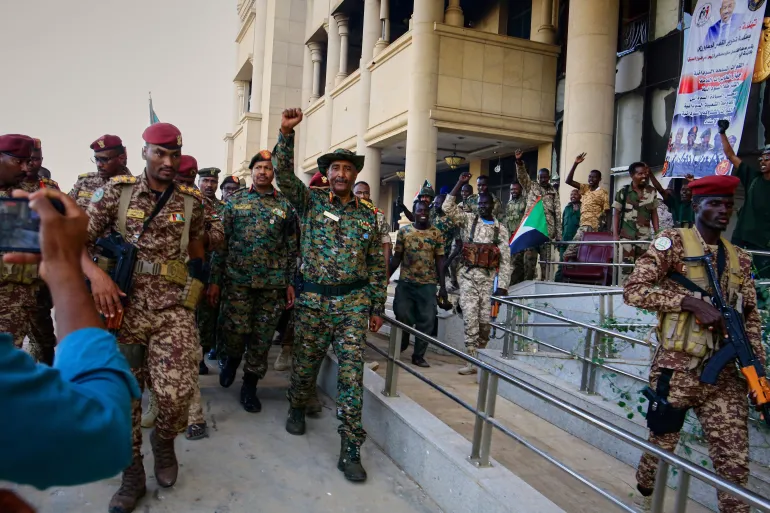
Sudanese military chief Abdel Fattah al-Burhan recently vowed to reclaim every part of the country held by the RSF. His statement reflects the army’s determination to continue military operations rather than accept the current territorial division.
However, continued fighting could further destabilise Darfur, where civilians already face serious humanitarian challenges.
Sudan’s Civil War Deepens the Humanitarian Crisis
Sudan’s civil war began in April 2023 after a power struggle between the Sudanese army and the Rapid Support Forces escalated into widespread armed conflict.
Since then, fighting has killed tens of thousands of people, displaced large numbers of civilians and damaged critical infrastructure. Millions have been forced to flee their homes, while access to food, healthcare, clean water and other essential services has deteriorated in many areas.
The United Nations has described Sudan’s situation as the world’s worst humanitarian crisis, reflecting the scale of displacement, hunger and civilian suffering.
The latest reports from Nyala add to concerns that the conflict could continue to exact a heavy toll on civilians, particularly in areas where fighting is intensifying and humanitarian access is restricted.
Civilian markets, mining facilities and other economic sites are also vulnerable as the conflict expands. Damage to these locations can disrupt local trade, reduce household incomes and make essential goods more difficult to obtain.
What Happens Next in Sudan?
The latest airstrikes in Nyala reflect the continuing struggle between the Sudanese army and the RSF for control of strategically important territory.
Although the army claims to have killed dozens of fighters and destroyed command centres, the RSF’s allegations of civilian deaths remain a major concern. Independent confirmation of both the military claims and the reported market casualties will be important for establishing what happened.
As fighting spreads across Darfur and South Kordofan, further drone attacks could increase the danger to civilians and deepen Sudan’s humanitarian emergency.
The broader conflict shows little sign of an immediate resolution. With both sides continuing military operations and the army pledging to reclaim RSF-controlled territory, Sudan faces the prospect of prolonged instability, further displacement and additional civilian suffering.
The situation in Nyala highlights the urgent need to protect civilians, investigate reports of attacks on populated areas and ensure that humanitarian assistance reaches communities affected by the war.