Strait of Hormuz attacks intensify as US-Iran peace talks stall, threatening oil shipments, global energy supplies and regional security.
Hormuz Attacks Intensify as US-Iran Peace Talks Stall
TEHRAN, IRAN — Attacks on commercial shipping around the Strait of Hormuz have intensified as diplomatic efforts to end the ongoing US-Israel war on Iran remain deadlocked. Renewed threats against oil tankers, reports of maritime incidents and continued military operations have raised concerns about global energy supplies and the security of one of the world’s most important shipping routes.
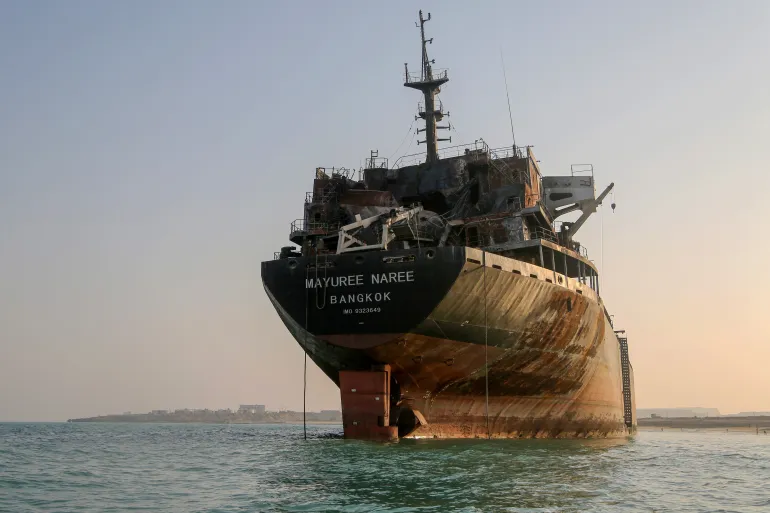
On Saturday night, Iran’s Islamic Revolutionary Guard Corps (IRGC) Navy reported that an unnamed crude oil supertanker had struck a naval mine and suffered a major fire while travelling through an unauthorised route with its navigation systems switched off. Iranian authorities warned that other vessels could face similar consequences if they ignored the country’s security rules in the strategic waterway.
The Strait of Hormuz is a critical international energy corridor through which approximately one-fifth of global oil and gas supplies normally pass. Any prolonged disruption could affect international oil prices, shipping costs and energy security across major economies.
Iran Warns of Further Attacks on Enemy Vessels
Iranian military officials have reiterated their readiness to conduct both defensive and offensive operations as the conflict continues. Habibollah Sayyari, chief of staff and joint coordinator of Iran’s army, said the country’s forces had already struck enemy vessels and would respond again if Iran faced further attacks.
His remarks came amid reports of several maritime security incidents in the Strait of Hormuz and the Gulf of Oman. Ships near Ras al-Khaimah in the United Arab Emirates were reportedly instructed by radio broadcasts to leave their anchorages overnight.
On Sunday afternoon, an unidentified projectile struck a tanker travelling outbound through the Strait of Hormuz. Separately, UAE coastguard personnel rescued 22 crew members after a fire broke out aboard an unidentified tanker near the country’s coastline. The cause of the fire was not immediately established.
These incidents highlight the growing risks facing commercial vessels operating in and around the Persian Gulf, where military activity and competing security claims have increased uncertainty for international shipping companies.
US Naval Blockade Adds to Shipping Disruptions
The United States has continued enforcing a naval blockade targeting Iran’s southern ports. On Sunday, US Central Command released footage showing a fighter jet striking the stern of a Panama-flagged cargo vessel in the Gulf of Oman, disabling its propulsion system.
According to US military claims, the operation was intended to enforce restrictions on vessels associated with Iran’s maritime trade.
Since the blockade was reinstated in mid-July, US forces have reportedly disabled four commercial vessels, redirected 135 ships and destroyed 10 tankers linked to Iran. Washington has also claimed that Tehran has been unable to export oil through the blockade line.
The measures have added pressure to Iran’s energy exports while increasing the potential for further confrontations between Iranian and American forces. Commercial shipping operators now face heightened uncertainty over safe passage, insurance costs and the possibility of vessels being caught in military operations.
Strait of Hormuz Attacks Threaten Global Oil Supplies
Maritime attacks have increased significantly in recent weeks. At least 12 ships were reportedly attacked during the week ending October 5, marking the highest weekly total since the war began. One vessel was struck off the northern coast of Qatar, suggesting that the security threat extends beyond the immediate Strait of Hormuz passage.
The renewed attacks have also affected oil transportation volumes. Shipping data showed that average crude oil flows through the strait reached approximately 8.5 million barrels per day during the week ending October 7.
That figure was around 40 percent below normal levels, indicating that the recent recovery in oil shipments may be difficult to sustain amid continuing military tensions.
A prolonged reduction in tanker traffic could place additional pressure on global energy markets. Countries heavily dependent on Middle Eastern oil and gas exports could face higher import costs, while shipping companies may need to consider alternative routes, longer journeys and additional security measures.
Iran and the United States Remain Divided Over Peace Talks
Diplomatic efforts to end the war have made little progress despite continued communication through intermediaries.
Iran has called for a return to a memorandum of understanding agreed in June, which subsequently collapsed. Tehran has also sought Washington’s support for a previously finalised agreement between Iran and Oman establishing temporary coordinated entry and exit routes for vessels passing through the Strait of Hormuz.
However, a breakthrough appears unlikely in the near term as both sides maintain competing demands. Political developments in the United States and Israel may also influence the pace of negotiations ahead of their respective elections.
US Vice President JD Vance recently said Iran must make a meaningful reduction in its nuclear enrichment capacity to bring the conflict to an end. His comments suggested a possible shift from Washington’s previous insistence that Iran completely abandon domestic uranium enrichment.
Tehran, meanwhile, has indicated that an agreement involving the dilution of highly enriched uranium could be discussed during later stages of negotiations. However, Iranian officials have maintained that the country will not permanently abandon its right to nuclear enrichment.
Iran Rejects Pressure to Abandon Nuclear Enrichment
Iran’s nuclear programme remains one of the central obstacles to a broader peace agreement. Mohammad Eslami, head of Iran’s nuclear agency, defended the country’s nuclear industry, arguing that its technological achievements could not be halted.
He also criticised the International Atomic Energy Agency for failing to condemn repeated US threats against Iranian nuclear facilities.
Behrouz Kamalvandi, spokesperson for Iran’s nuclear agency, said the government would pursue its national interests through diplomatic negotiations or military action if necessary.
His remarks underscored Tehran’s position that negotiations remain possible but will not come at the expense of its strategic objectives.
Outlook: Rising Risks for Energy Markets and Regional Security
The intensifying attacks in the Strait of Hormuz, combined with the US naval blockade and stalled nuclear negotiations, have created a volatile situation for the Middle East and the global economy.
With oil shipments already below normal levels, further attacks could deepen disruptions to international energy supplies and increase uncertainty across maritime trade routes.
The direction of the conflict will largely depend on whether Washington and Tehran can narrow their differences over nuclear enrichment, sanctions, maritime access and regional security.
Until meaningful diplomatic progress is achieved, the Strait of Hormuz is likely to remain a major flashpoint, with significant implications for oil prices, international shipping and global energy security.