Saudi-led coalition says it destroyed Houthi missile launchers, storage tunnels and military facilities in Yemen amid renewed regional attacks.
Saudi-Led Coalition Targets Houthi Missile Facilities in Yemen
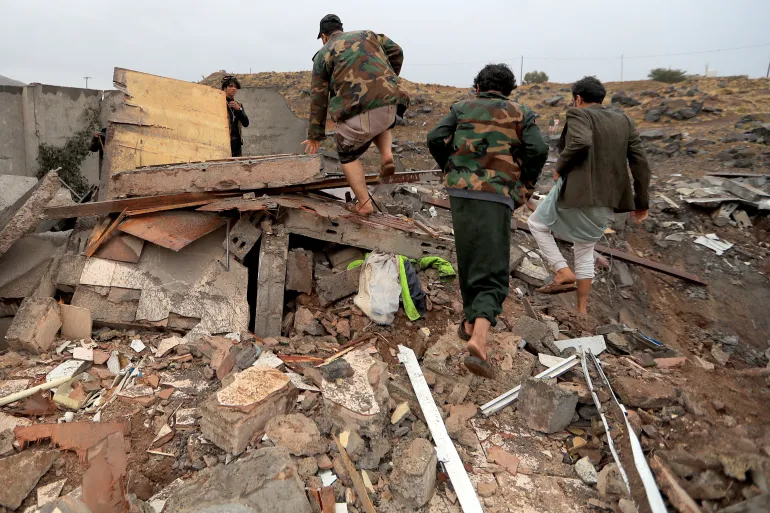
The Saudi-led military coalition fighting Yemen’s Houthi movement says it has carried out strikes against missile launchers, storage facilities and underground tunnels in Houthi-controlled areas of Yemen, as attacks involving Saudi Arabia and Yemeni forces continue to intensify.
Coalition spokesperson Major General Turki al-Maliki said the operation destroyed four ballistic missile launchers, five tunnels used to store missiles and an additional missile storage facility. He said the strikes were intended to weaken the Houthis’ missile capabilities and disrupt supply routes connecting areas under their control.
The announcement came amid renewed hostilities between the Houthis and the Saudi-backed Yemeni government, alongside reported missile and drone attacks targeting Saudi territory. The developments underline the growing security concerns surrounding the conflict and its potential impact on civilians and critical infrastructure.
Coalition Says Strikes Targeted Missile Infrastructure
According to reporting by Al Jazeera, citing information from the coalition and international news agencies, the operation focused on military installations and logistical networks used by Houthi forces.
Al-Maliki said the coalition had targeted missile launchers, storage tunnels and other military equipment. The operation also involved attacks on fortifications and Houthi positions near frontline areas inside Yemen.
The coalition described the campaign as a response to repeated attacks attributed to the Houthis. Its stated objective was to reduce the threat posed by the group’s missile and drone capabilities.
In a separate statement, the coalition said its air defences had intercepted and destroyed a ballistic missile launched toward Riyadh. Saudi officials attributed the launch to the Houthis.
The coalition’s statements describe its assessment of the operation and its results. Independent confirmation of the full extent of the reported damage was not available in the cited reporting.
Houthis Claim Further Attacks on Saudi Arabia
The latest coalition operation took place as the Houthis claimed responsibility for additional attacks against Saudi targets.
Yahya Saree, the group’s military spokesperson, said the Houthis had launched a ballistic missile toward Riyadh’s King Khalid International Airport. He also claimed that drones had targeted oil pumping stations in Saudi Arabia.
The claims came after Saudi Arabia’s capital experienced heightened security concerns and reports of missile threats. Saudi authorities have faced repeated attempts to strike strategic infrastructure during the latest escalation.
The Houthis also claimed responsibility for missile attacks against military positions and weapons depots belonging to Saudi-backed government forces in Yemen’s Aden and Lahij governorates.
These claims have not all been independently verified. The competing accounts illustrate the difficulty of establishing the precise scale and impact of military operations during an intensifying conflict.
Riyadh Airport Reopens Amid Security Concerns
King Khalid International Airport in Riyadh has been a major focus of the recent tensions.
According to Al Jazeera’s October 26 report, a Houthi attack on the airport earlier in the month killed 13 people and injured more than 300. The incident was reported as the deadliest attack on Saudi Arabia in more than a decade.
The airport was temporarily closed following the attack, disrupting passenger travel and contributing to the postponement of Saudi Arabia’s flagship investment conference until 2027.
Flights resumed on Sunday, October 25, but the Houthis subsequently warned travellers against using the airport, describing it as a military target.
The situation has raised concerns about the vulnerability of civilian aviation and other infrastructure during the conflict. Any further disruption could affect passengers, commercial activity and regional transport connections.
Yemen’s Conflict Enters Another Dangerous Phase
The latest strikes form part of a wider escalation in Yemen’s long-running war.
The Houthis, also known as Ansar Allah, seized the capital, Sanaa, in 2014, prompting a Saudi-led military intervention the following year in support of Yemen’s internationally recognised government.
A truce established in 2022 reduced much of the fighting, but the relative calm has since broken down, according to Al Jazeera’s reporting. Renewed offensives and attacks on strategic infrastructure have brought the conflict into a more volatile phase.
Yemen remains divided between the Houthis, who control Sanaa and other areas, and government forces backed by Saudi Arabia and regional partners. Shifting front lines and competing military operations continue to complicate efforts to restore stability.
The renewed fighting also threatens civilians living near military positions and infrastructure. Air strikes, missile attacks and damage to essential facilities can disrupt access to transport, health services and other basic needs.
What Happens Next?
As of October 26, the Saudi-led coalition says it is continuing operations against Houthi missile capabilities and supply networks. The Houthis, meanwhile, have claimed further attacks against Saudi targets and forces aligned with the Yemeni government.
The immediate situation remains fluid, with the parties offering competing accounts of their military actions. The full extent of the damage caused by the latest strikes, along with any additional civilian casualties, remains unclear from the cited reports.
Further developments will depend on the course of military operations and whether the parties take steps to reduce hostilities. For now, the latest strikes and missile claims point to continued instability in Yemen and persistent security risks for Saudi Arabia and the wider region.