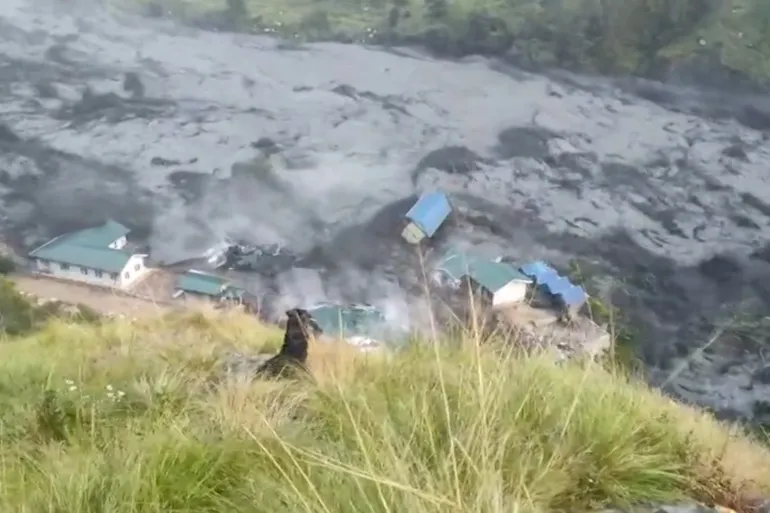
Flash floods in Nepal have swept away homes and bridges, leaving five people missing as rescue teams evacuate residents from high-risk areas.
Nepal Flash Floods Leave Five Missing as Homes and Bridges Are Swept Away
KATHMANDU, NEPAL — Flash floods in central Nepal have swept away homes, destroyed bridges and damaged infrastructure, leaving at least five people missing, according to disaster management officials. The latest disaster has raised fresh concerns about flooding and landslides in the Himalayan nation, which has suffered several deadly weather-related emergencies in recent months.
The flooding occurred in the Gorkha district, approximately 100 kilometres (62 miles) west of Kathmandu, after a landslide blocked the Budhi Gandaki River on Saturday. The obstruction caused water to accumulate before triggering flooding downstream, affecting nearby villages and infrastructure.
According to Nepal’s National Disaster Risk Reduction and Management Authority (NDRRMA), two women and three men remain unaccounted for. Authorities have not reported any deaths from the latest incident, while rescue operations and emergency monitoring efforts continue.
At least 82 people, including nine foreign nationals, have been rescued from the affected areas. Emergency teams are working to assess the damage, locate missing residents and move people away from areas vulnerable to further flooding.
Landslide Triggers Flash Flooding in Gorkha District
The disaster began when a landslide in Chumnubri village blocked the Budhi Gandaki River, creating dangerous conditions for communities downstream. The sudden surge of floodwater carried away houses, damaged roads and destroyed vital transportation links.
Officials reported that approximately 12 houses and two suspension bridges were swept away by the powerful floodwaters. A camp associated with a hydroelectric project also suffered damage, with some construction equipment carried away by the torrent.
The flood caused further destruction by washing away a highway bridge connecting Gorkha district with neighbouring Dhading district. Dharam Raj Uprety, chief executive of the national disaster management authority, confirmed the damage caused by the muddy floodwater.
The destruction of homes, bridges and other infrastructure has disrupted local transportation and increased concerns about access to remote settlements. Communities in mountainous areas can be particularly vulnerable when landslides block rivers and sudden flooding leaves residents with little time to escape.
Authorities Order Evacuations Along Riverbanks
Following the incident, local officials issued warnings to residents living along the Budhi Gandaki River and other potentially affected areas. People were urged to leave vulnerable riverbanks and move to safer locations as a precaution against additional flooding.
Dharmendra Kumar Mishra, the senior administrative official in Gorkha district, said residents downstream had been instructed to evacuate and remain safe.
The national disaster management authority also issued alerts for communities in Gorkha, Tanahun, Chitwan, East Nawalparasi and West Nawalparasi districts. Authorities asked local representatives to help relocate people from high-risk areas and support ongoing search and rescue operations.
Army personnel and police rescue teams have reached the affected region to assist residents and monitor the situation. Officials have also used helicopter surveillance to assess conditions and identify areas requiring urgent assistance.
The response focuses on finding the five missing people, protecting vulnerable communities and preventing further casualties if water levels rise or additional landslides occur.
Survivors Describe Fear and Destruction
Residents of Chumnubri have described the flooding as frightening, particularly given the scale of destruction caused by previous disasters in Nepal.
Laxmi Gurung, a local official from Chumnubri rural municipality, said the latest flood resembled earlier devastating incidents and had left residents deeply shaken.
She reported that her house had been destroyed and the area had lost electricity. Despite the extensive damage, no casualties had been reported in her immediate account.
The loss of homes, electricity and transport infrastructure presents significant challenges for affected families. Emergency assistance, safe shelter and the restoration of essential services will be important as authorities continue assessing the damage.
Nepal Faces Renewed Flood and Landslide Risks
The latest flash floods come after a series of severe weather-related disasters across Nepal. In August, a catastrophic flood linked to a glacier collapse in the wider Himalayan region caused extensive destruction and major loss of life. Thousands of people were reported missing in the aftermath of that disaster.
The Budhi Gandaki River is a tributary of the Trishuli River, which connects to a wider river system affected by previous flooding. The region’s mountainous terrain, unstable slopes and river valleys can increase the danger when landslides obstruct waterways.
Heavy rainfall in late September also triggered floods and landslides across Nepal, killing at least 21 people, according to disaster management authorities.
These recurring emergencies highlight the country’s vulnerability to extreme weather, particularly during periods of intense rainfall. Landslides can rapidly block rivers, while sudden releases of accumulated water can produce destructive flash floods downstream.
Search and Rescue Operations Continue
Rescue teams are continuing efforts to locate the five missing residents and assess the full extent of the damage in Gorkha district. Authorities are also monitoring river conditions and communicating evacuation instructions to communities that could face further danger.
Residents in vulnerable locations have been urged to follow official warnings, avoid riverbanks and move to designated safe areas when instructed. Damaged bridges and roads may also complicate access to remote communities, making coordination between emergency responders and local authorities essential.
The immediate priorities remain finding missing people, supporting displaced families and preventing additional casualties.
As Nepal continues to experience repeated floods and landslides, the latest disaster underscores the importance of early warning systems, emergency preparedness and rapid evacuation measures. With homes destroyed and key infrastructure damaged, recovery efforts will be crucial for affected communities in the days ahead.