Trump faces criticism after targeting Muslim Senate candidate Abdul El-Sayed at a Michigan rally, raising concerns over anti-Muslim rhetoric ahead of the 2026 midterms.
Trump Faces Criticism Over Anti-Muslim Attacks on Abdul El-Sayed at Michigan Rally
President Donald Trump intensified his attacks on Democratic Senate candidate Abdul El-Sayed during a Republican campaign rally in Port Huron, Michigan, on October 25, making allegations about the candidate’s Muslim faith and supposed links to Islamic extremism. The remarks have drawn renewed attention to anti-Muslim rhetoric in the run-up to the November 3, 2026, US midterm elections.
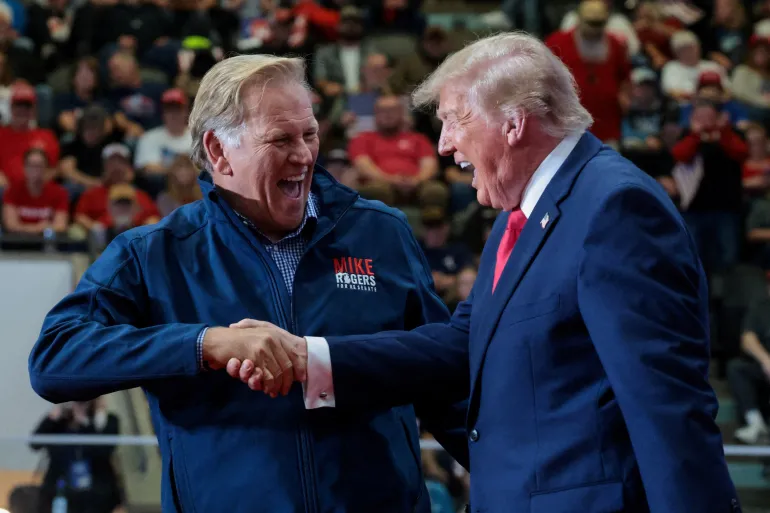
Trump appeared at the event to support Republican Senate candidate Mike Rogers and other GOP contenders. Rather than concentrating exclusively on the economy or other domestic policy concerns, the president repeatedly portrayed El-Sayed as a potential security threat, using language that linked the Democratic candidate to terrorism without providing evidence to substantiate those accusations.
The rally took place as Republicans and Democrats compete for control of Congress, with Michigan’s Senate race emerging as an important contest.
Trump Targets El-Sayed Over His Muslim Faith
During his speech, Trump described El-Sayed as a “jihadist” and alleged that he had connections to the Muslim Brotherhood, an Islamist political movement originating in Egypt. The president also suggested that El-Sayed would be unfit to serve in the Senate and made claims about the candidate’s supposed desire to introduce Islamic law in the United States.
According to Al Jazeera’s October 26 report, Trump further warned that a Democratic victory would expose the country to increased threats from people he characterized as extremists.
However, the reporting found no evidence that El-Sayed belonged to the Muslim Brotherhood or another foreign organization. Trump’s accusations should therefore be understood as political allegations rather than established facts.
El-Sayed, a Michigan-born public health specialist and former public official, has previously rejected the focus on his religious identity, arguing that it distracts from issues affecting ordinary Americans. His policy priorities include reducing living costs and improving access to healthcare.
The rhetoric at the rally also reflected a broader debate about how Muslim Americans are portrayed in national political campaigns, particularly when candidates from minority religious communities seek prominent public office.
Republican Mike Rogers Joins the Campaign Effort
Trump’s visit was designed to strengthen support for Rogers, the Republican candidate challenging El-Sayed for Michigan’s open Senate seat.
Rogers, a former member of the US House of Representatives, appeared alongside Trump and also raised questions about El-Sayed’s political associations. He suggested that organizations connected to the Democratic candidate supported controversial groups, although the claims reported at the rally were not accompanied by evidence establishing the alleged connections.
Rogers also attempted to associate El-Sayed with the Democratic Socialists of America. Al Jazeera reported that El-Sayed is not a member of that organization.
The race has broader implications for the balance of power in Washington. Republican Senator Gary Peters is retiring, leaving his seat open. A Republican victory would help the party defend its Senate majority, while a Democratic win would improve the opposition’s prospects of regaining control of the chamber.
The Senate’s narrow political balance has made competitive races such as Michigan’s especially significant in the 2026 election cycle.
Anti-Muslim Rhetoric Becomes an Election Issue
The Port Huron event highlighted the role of religious identity and national security claims in the campaign.
Trump’s remarks drew on themes he has used in previous political campaigns, including warnings about Muslim immigration and terrorism. His comments also invoked concerns about the introduction of Islamic law, despite the absence of evidence presented at the rally that El-Sayed intended to pursue such a policy.
The controversy has attracted attention beyond the candidates themselves. The Associated Press reported on October 25 that Trump’s remarks prompted criticism from Bishara Bahbah, founder of Arab Americans for Trump, who described the attacks as unacceptable and warned that Arab American voters would remember them on Election Day.
The episode illustrates a potential challenge for Republicans seeking support among voters from Arab American and Muslim communities, including in Michigan, where these constituencies have featured prominently in political debates.
Former President Barack Obama also campaigned in Michigan on October 24 in support of Democratic candidates. His appearance came one day before Trump’s rally and formed part of the competing efforts by both parties to mobilize voters ahead of the midterms.
Economic Concerns Remain Central to the Contest
Although the Senate race dominated Trump’s speech, the president also addressed the economic consequences of the US-Israel war against Iran.
Al Jazeera reported that the average price of gasoline in Michigan had reached $4.83 per gallon on October 25, compared with $2.91 before the conflict began. Higher energy costs have added to concerns about household expenses at a time when economic conditions remain an important consideration for voters.
Trump defended his decision to pursue the war and argued that preventing Iran from acquiring a nuclear weapon was necessary. Iran has denied seeking nuclear weapons and maintains that its uranium enrichment program serves civilian purposes.
The president also highlighted financial gains for American energy companies amid changes in global oil markets. His comments came as consumers faced higher prices at the pump, an issue that could influence voters’ assessments of the administration’s economic record.
For Democrats, the combination of living costs, healthcare affordability and foreign policy provides an opportunity to challenge the Republican record. For Republicans, the Michigan campaign represents an effort to retain support and prevent Democrats from making significant gains in Congress.
Michigan Race Heads Toward Election Day
The competing campaigns are entering the final stretch before the November 3 midterm elections. El-Sayed and Rogers are seeking the same open Senate seat, with the outcome carrying consequences for the balance of power in Washington.
Trump’s appearance demonstrated his continued ability to attract and energize Republican supporters. At the same time, his attacks on El-Sayed have intensified debate over religious discrimination, political accountability and the use of national security allegations during election campaigns.
The central claims made against El-Sayed remain unsubstantiated in the reporting reviewed for this article. The campaign’s next decisive development will be the election itself, when Michigan voters determine who will represent the state in the US Senate.